5 Views on Sanctification

Several years ago a book was released attempting to outline and compare the major divergent views about the doctrine of sanctification, Five Views on Sanctification.  In this book five respected theologians, each a proponent of one of the respective positions gave an outline explanation of the positions: Wesleyan/Holiness, Reformed/Puritan, Keswick, Dispensational, and Pentecostal.  Following the introduction by the adherent theologian, each of the other theologians then interact with the presented view in a rebuttal/defense discussion that reflects the strengths and weaknesses of the various positions.

This is an important discussion because it reflects one of the major areas where Christians view things from vastly different perspectives.  But unlike other areas where sincere Believers differ (i.e. Eschatology, Baptism, Church Government, Complementarian vs. Egalitarian) this subject is not often as clearly articulated as those other subjects.  Rather, sanctification seems to be assumed.  I am not making the case that we add this discussion to our all too common arguments, as we might add another log on a fire.  But I do see a value in awareness of these differences so that we can talk to one another. Failure to understand that many hold different views on this subject lead to speaking in different languages and/or talking at one another instead of talking to one another.

For this reason I appreciate an essay by Mike Sullivan of Xenos Christian Fellowship.  Mike has summarized the fore mentioned book in an essay, 5 Views of Sanctification.  Mike summarizes the positions and interacts with the book, then adds his own comments to the subject.

While the book is not long, it is not something I expect a lot of people will take time to read.  Mike’s essay makes this subject much more accessible to us.

13 Letters

There is no stretch of an imagination that would cause anyone to classify where I live as Urban.  BUT I still appreciate what the folk at Reach Life have developed.

13 Letters is a curriculum designed with Urban Youth in mind.  Taking the substance of the Paul’s letters, this curriculum applies Sound Doctrine to the lives of Urban Youth.  There is also an accompanying HipHop album that serves as a survey of the Pauline Epistles. Listen to the songs:

  1. Romans
  2. 1 Corinthians
  3. 2 Corinthians
  4. Galatians
  5. Ephesians
  6. Philippians
  7. Colossians
  8. 1 Thessalonians
  9. 2 Thessalonians
  10. 1 Timothy
  11. 2 Timothy
  12. Titus
  13. Philemon

Each of these songs is a remarkably faithful and in-depth exposition of the respective letter.  In addition to those songs written to reflect each of the Pauline Epistles, there are a handful of additional songs:

These songs can be purchased or downloaded from Amazon: 13 Letters

The Connection of the Law With the Gospel

There is a common question about how the Law of God and the Grace of God relate to one another. Some seem to wonder how they even co-exist. 

Spurgeon, though, when once asked how he reconciled the Law and the Gospel, replied:

“There is no need to reconcile friends.”

Granted, there is some tension between these two great Biblical themes. But there is an answer – a wonderful, glorious answer. 

Charles Bridges, a 19th Century Anglican pastor-theologian, takes up this  issue and offers some profound and practical answers in an essay titled: The Connection of the Law With the Gospel. 

Bridges’ language is a bit archaic, but with some effort most people should be able to grasp the richness of his insights. Having found it nowhere else on the web, I post his essay below for the benefit those willing to work through it.

But I have been thinking: Perhaps one day I will edit and translate this essay to language for our day… and post it again.

Continue reading

Externally Focused Quest

Most churches have a subtle, perhaps even unspoken, objective.  It is driven by the question:

“How can we be the best church in our community?”

How a church answers that question determines the approach to membership, staffing, budget, etc.

In a book I am now reading, Externally Focused Quest, authors Eric Swanson & Rick Rusaw ask an entirely different, more poignant, question:

“How can we be the best church for our community?’

The difference between the two questions dramatically influences the way we approach ministry,  approach our community, and relate to other churches.  Those driven by this question are inclined to be highly attractional, may tend to view neighbors as being placed by God so that they can be harvested for the growth and benefit of the church.  And while many people would be gracious enough to realize that there are enough people to go around, and that no one church can monopolize all the people in an area, this question inherently promotes a sense of competion between churches.

Perhaps even more significant, the differences between these two questions radically reveals our view of God and what we believe to be God’s purpose for the church.  The church that wants to know how they can be the best for the community understands that God is on a mission and invites us – even demnds for us – to engage in it.  It is a church that recognizes God has placed His church in the community primarily to benefit the city and it’s people (see Jeremiah 29.7 & Proverbs 11.10), and consequently to draw people to himself.  While some may ask this question and still posess an unhealthy competitiveness, the question itself does not inherently demand competiton.  To be the best for the community means to play the roles needed in the community.  There is room for more than one church to play various roles.

Being Sent


This past Sunday I offered a brief exposition of John 17.6-21 & John 20.21, explaining what it means to be “sent” into our community and world in the same way God the Father sent Jesus into our world.  These texts demand that we understand, as John Stott says: “Our God is a missionary God.”  They also demand that we continually ask ourselves:

  • In what way was Jesus sent?
  • How am I responding to/reflecting being sent?

 While in no way exhaustive, I offered 5 simple observations for us to put into practice:

  1. More Incarnational than Attractional
  2. Focus More on Building Bridges than Building Walls
  3. Prioritize Service > “Serve Us”
  4. Move Beyond Fellowship to Functional Unity
  5. Measure Our Effectiveness More by Our Impact than Our Attendance.

How Can We Look Forward to Heaven?

Some time ago someone I encountered posed an interesting question: “How can we look forward to heaven when none of our favorite things are sure to be there?”

C. S. Lewis’ offers a breathtaking answer:

Let us construct a fable.

Let us picture a woman thrown into a dungeon. There she bears and rears a son. He grows up seeing nothing but the dungeon walls, the straw on the floor, and a little patch of the sky seen through the grating, which is too high up to show anything except sky.

This unfortunate woman was an artist, and when they imprisoned her she managed to bring with her a drawing pad and a box of pencils. As she never loses the hope of deliverance, she is constantly teaching her son about that outer world which he has never seen. She does it very largely by drawing him pictures. With her pencil she attempts to show him what fields, rivers, mountains, cities, and waves on a beach are like.

He is a dutiful boy and he does his best to believe her when she tells him that that outer world is far more interesting and glorious than anything in the dungeon. At times he succeeds. On the whole he gets on tolerably well until, one day, he says something that gives his mother pause. For a minute or two they are at cross-purposes. Finally it dawns on her that he has, all these years, lived under a misconception.

‘But’, she gasps, ‘you didn’t think that the real world was full of lines drawn in lead pencil?’

‘What?’ says the boy. ‘No pencil marks there?’

And instantly his whole notion of the outer world becomes a blank. For the lines, by which alone he was imagining it, have now been denied of it. He has no idea of that which will exclude and dispense with the lines, that of which the lines were merely a transposition–the waving treetops, the light dancing on the weir, the coloured three-dimensional realities which are not enclosed in lines but define their own shapes at every moment with a delicacy and multiplicity which no drawing could ever achieve. The child will get the idea that the real world is somehow less visible than his mother’s pictures. In reality it lacks lines because it is incomparably more visible.

So with us. ‘We know not what we shall be’; but we may be sure we shall be more, not less, than we were on earth. Our natural experiences (sensory, emotional, imaginative) are only like the drawing, like pencilled lines on flat paper. If they vanish in the risen life, they will vanish only as pencil lines from the real landscape, not as a candle flame that is put out but as a candle flame which becomes invisible because someone has pulled up the blind, thrown open the shutters, and let in the blaze of the risen sun.

– C. S. Lewis, ‘Transposition,’ in The Weight of Glory, 85-86

What is God Like?

What is God like?  Describe to me the God you say you believe in. 

In the first chapter of his best selling book, Crazy Love, Francis Chan challenges his readers to ponder who God is. “Who is it that you are praying to?” Chan wants us to ask.  I really appreciate that challenge and that exercise because, quite frankly, I am not sure most people, even in our churches, can offer a substantial answer.

J.I. Packer wrote:

“Those who know God have great thoughts of Him.”

Donald Carson wrote:

“The better we know God, the more we will want all of our existence to revolve around him, and we will see that the only goals and plans that really matter are those that are somehow tied to God himself, and to our eternity with him.”

How well do you know God?

While there is no substitute for Scripture, sometimes the insights of others can help us notice things that we might otherwise not see. Like a tourguide who has navigated a trail many times is able to point out things of importance, of beauty, and of danger, so is one who has walked with God and given himself to careful study of God.

I have found the following books are faithful to Scriptureand helpful in shaping my knowledge of God:

Knowledge of the Holy by A.W. Tozer 

Attributes of God by A.W. Tozer

Holiness of God by R.C. Sproul

The Pleasures of God by John Piper

Knowing God by J.I. Packer

Doctrine

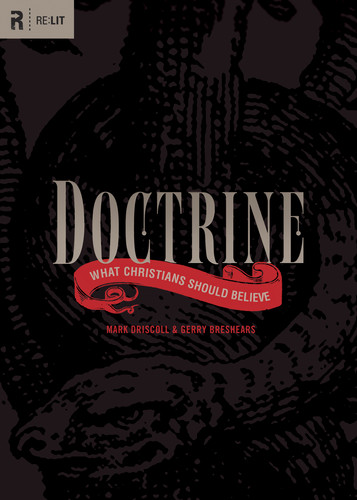
Do you want a good overview of the doctrines of the Christian faith? Would you be open to a introductory course, but are afraid people in your church might think lesser of you because of what you don’t know? (Most of them don’t know either, by the way.)  re:Lit publications has developed Doctine by Mark Driscoll & Gerry Breshear to introduce an overview of the themes of the Bible.

On the web site, across the top of the screen are icons that provide a brief synopsis of each doctrine. Additionally at the top right of the synopsis is a link to an audio/video of messages Driscoll delivered at Mars Hill Church that served as a foundation for each chapter.

Crossway Books has an e-book available free online.

  • Click: Doctrine
  • Scroll down to Contents
  • Click the Chapter Ttile

Theology for Life

As a pastor from a confessional denomination one of the more difficult tasks I regularly – even constantly – encounter is helping people past a distatse for doctrine. 

I understand why so many are so often hesitant to embrace any system of doctrine.  “Doctrine divides” is a commen lament. And, regretably, it is often an accurate one.  I see many who are at odds with others over secondary principles.  Another issue is that sometimes those who are the strongest proponents of sound theology carry rather “ugly” attitudes.  Looking at life, and the church, with a singular perspective (as opposed to tri-perspectival) some assume that mere apprehension and submission to a system of doctrine is the only thing that matters.  As one of my old pastors often said: “Their theology is dead right – but mostly dead.” 

Of course there are other reasons to be considered. 

The historical influence of the Second Great Awakening continues to infect large portions of the American church.  One of the most significant effects is that many Christians, and a number of church traditions, are flarly anti-intellectual.  Their faith is almost entirely “feelings” built aroud a few simple theological propositions.

And maybe the biggest hurdle is that developing a comprehensive understanding of a system of theology is, simply, hard work.  Like learning anything, it is challenging and takes time and study. 

Whatever the reasons for hesitancy, I maintain it is still important.  In this brief video Tim Keller affirms the benefits of sound doctrine. In fact he asserts, I believe correctly, that everyone already lives out their theology…

If this so, it would seem important to think it all through.

Pure As the Driven Snow

I don’t think I’ve ever met anyone who enjoys “old” snow – you know, the snow that has been around a few day, has blackened from plowing, is choppy from people playing in the yard.  I know that’s not the type of snow my duaghter enjoys looking at.

After the snowstorm this past Friday night, that dumped 3/4 of a foot all around us, my daughter was concerned that her brothers “messed up” the yard. She likes looking at the pure smoothe snow, untouched by human hand – or boot. 

That started me thinking. There is a methaphor there somewhere.

I think we all have have an innate appreciation for the beauty of purity. Unfortunately, because of our sin, purity does not seem to last long in this life. Sometimes it is corrupted and turns black and ugly. Sometimes it is just messed up by us as we go about our work and play.  But fleeting as it is, while it is here it is something to behold.

This all reminds me that God is on a mission, not simply to “save” a bunch of individuals but, to restore and recreate that which has been corrupted and messed-up.  As beautiful and peaceful as it is to look at the pure snow on the pastures outside my living room window, a beauty is coming that is both incomparable and incorruptable. And that will really be something to see.

A Jesus Manifesto

“Christians have made the gospel about so many things… Things other than Christ.”  So opens the document, written by Leonard Sweet and Frank Viola, titled: A Jesus Manifesto.

I’ve long been a fan of Leonard Sweet, our theological differences aside. But Sweet’s love for Jesus, his love for God’s people, and his amazing story-telling ability make his books and articles a pleasure to read. Besides, I’ve not found our differences to come up that frequently in the things he writes. His focus is spirituality, not systematic theology.  At the very least Sweet always makes me think – and often makes me laugh.

I don’t know as much about Frank Viola. I’ve heard of him, but I don’t recall having ever read anything he has written – at least nothing before A Jesus Manifesto.

But as I read through this manifesto I found I appreciated the heart of both men. I also appreciate their effort to put into words something that needs to be said in this generation.  Paraphrasing the words of the old hymn, we need to “Turn our Eyes upon Jesus.”

To read the document click the link above.  On that blog you will also find links to download the document in .pdf, listen to the authors read their manifesto, and listen to Steve Brown interview the authors at Steve Brown, Etc.  Facebook users will also find a link to a group page discussing the manifesto.

Danger of Christian Complacency

It may defy common wisdom, but sound doctrine is important to the renewal of the contemporary church.  While many view doctrine as divisive and unecesary trivia, recent studies by Thom Rainer, Ed Stetzer, and others, reveal that sound doctrine is a hallmark of churches that are the most effective in evangelism.  Further, both writers, in addition to Collin Hansen’s experience, suggest that open discussion about sound doctine is what younger, unchurced spiritual seekers are clamoring for.  So while it may defy common wisdom, we also need to remember that some things are more common than wise.

The following is a short article by 19th Century Anglican Bishop, J.C. Ryle, who makes the case for the necessity of sound teaching in our lives and ministries.  See what you think.

*** 

The times require distinct and decided views of Christian doctrine. I cannot withhold my conviction that the professing Church is as much damaged by laxity and indistinctness about matters of doctrine within, as it is by skeptics and unbelievers without. Myriads of professing Christians nowadays seem utterly unable to distinguish things that differ. Like people afflicted with color–blindness, they are incapable of discerning what is true and what is false, what is sound and what is unsound. If a preacher of religion is only clever and eloquent and earnest, they appear to think he is all right, however strange and heterogeneous his sermons may be. They are destitute of spiritual sense, apparently, and cannot detect error. The only positive thing about them is that they dislike distinctiveness and think all extreme and decided and positive views are very naughty and very wrong!

These people live in a kind of mist or fog. They see things unclearly, and do not know what they believe. They have not made up their minds about any great point in the Gospel, and seem content to be honorary members of all schools of thought. For their lives they could not tell you what they think is truth about justification, or regeneration, or sanctification, or the Lord’s Supper, or baptism, or faith or conversion, or inspiration, or the future state. They are eaten up with a morbid dread of controversy and an ignorant dislike of party spirit; and yet they really cannot define what they mean by these phrases. And so they live on undecided; and too often undecided; they drift down to the grave, without comfort in their religion, and, I am afraid, often without hope. Continue reading

Contemporary Evangelical Creed


Crumbling Steeple

The following is a spoof on the substance of much of contemporary Evangelicalism.  It is taken from a past edition of Modern Reformation, probably Jan/Feb 1997, but I am not sure of the original publication date. 

I know I may be stepping into a hornets nest here, but I post it because I find it funny – sad, but funny:

I believe in God who once was Almighty, but sovereignly chose not to be sovereign;  and in Jesus, my personaLordandSavior, Who loves me and has a wonderful plan for my life, Who came into my heart when I asked him to, and is now seated at the right ventricle of my belief in him, Who walks with me and talks with me along life’s narrow way, and tells me I am his own, Who shall come again with secrecy to rapture us outta’ here, Whose kingdom shall last exactly one thousand years; And in the Holy Ghost, who did some weird stuff at Pentecost, but doesn’t do much more anymore except speak to the hearts of individual believers.

And I believe in this local, independent, and powerless church, insofar as it is in line with my personal interpretation of the Bible and does stuff I like;  in one Believer’s baptism for the public proof of my decision for Christ; and in giving my personal testimony for soul winning.

And I look for the identity of the Antichrist, and know that the Last Days are upon us.

– Ay-men

Infection of Complacency

Indifferent

Here is a thought from J.C. Ryle that transcends the gulf between 19th Century Britain to speak to 21st Century American Evangelicals:

The times require distinct and decided views of Christian doctrine. I cannot withhold my conviction that the professing Church is as much damaged by laxity and indistinctness about matters of doctrine within, as it is by skeptics and unbelievers without. Myriads of professing Christians nowadays seem utterly unable to distinguish things that differ. Like people afflicted with color–blindness, they are incapable of discerning what is true and what is false, what is sound and what is unsound. If a preacher of religion is only clever and eloquent and earnest, they appear to think he is all right, however strange and heterogeneous his sermons may be. They are destitute of spiritual sense, apparently, and cannot detect error. The only positive thing about them is that they dislike distinctiveness and think all extreme and decided and positive views are very naughty and very wrong!

These people live in a kind of mist or fog. They see things unclearly, and do not know what they believe. They have not made up their minds about any great point in the Gospel, and seem content to be honorary members of all schools of thought. For their lives they could not tell you what they think is truth about justification, or regeneration, or sanctification, or the Lord’s Supper, or baptism, or faith or conversion, or inspiration, or the future state. They are eaten up with a morbid dread of controversy and an ignorant dislike of party spirit; and yet they really cannot define what they mean by these phrases. And so they live on undecided; and too often undecided; they drift down to the grave, without comfort in their religion, and, I am afraid, often without hope.

The explanation of this boneless, nerveless, jelly–fish condition of soul is not difficult to find. To begin with, the heart of man is naturally in the dark about religion – has no intuitive sense of truth – and really needs instruction and illumination. Besides this, the natural heart in most men hates exertion in religion, and cordially dislikes patient, painstaking inquiry. Above all, the natural heart generally likes the praise of others, shrinks from collision, and loves to be thought charitable and liberal. The whole result is that a kind of broad religious “agnosticism” just suits an immense number of people, and specially suits young persons. They are content to shovel aside all disputed points as rubbish, and if you charge them with indecision, they will tell you: “I do not pretend to understand controversy; I decline to examine controverted points. I dare say it is all the same in the long run” – Who does not know that such people swarm and abound everywhere?

Now I do beseech all to beware of this undecided state of mind in religion. It is a pestilence which walks in darkness, and a destruction that wastes at noonday. It is a lazy, idle frame of soul which, doubtless, saves man the trouble of thought and investigation but it is a frame of soul for which there is no warrant in the Bible. For your own soul’s sake, dare to make up your mind what you believe, and dare to have positive, distinct views of truth and error. Never, never be afraid to hold decided doctrinal opinions; and let no fear of man and no morbid dread of being thought party–spirited, narrow, or controversial, make you rest contented with a bloodless, boneless, tasteless, colorless, lukewarm, undogmatic Christianity.

Mark what I say. If you want to do good in these times, you must throw aside indecision, and take up a distinct, sharply–cut, doctrinal religion. If you believe little, those to whom you try to do good will believe nothing. The victories of Christianity, wherever they have been won, have been won by distinct doctrinal theology; by telling men roundly of Christ’s vicarious death and sacrifice; by showing them Christ’s substitution on the cross, and His precious blood; by teaching them justification by faith, and bidding them believe on a crucified Savior; by preaching ruin by sin, redemption by Christ, regeneration by the Spirit; by lifting up the brazen serpent; by telling them to look and live – to believe, repent, and be converted. This – this is the only teaching which for centuries God had honored with success, and is honoring at the present day both at home and abroad.

It is doctrine – doctrine, clear, ringing doctrine which, like the ram’s horn at Jericho casts down the opposition of the devil and sin. Let us cling to decided doctrinal views, whatever some may please to say in these times, and we shall do well for ourselves, well for others, and well for Christ’s cause in the world.