It’s Not An Escape Route

I have not looked up the social science data to back up my premise, but I strongly suspect that the pervasive perception of Evangelical Christianity – at least of American Evangelicals – is that we are far “more heavenly minded than of any earthly good.”

That’s a caricature, I know. But it is an understandable caricature. The influence of certain eschatalogical (i.e. “Last Things, or “End Times”) theories over the past one-hundred-plus years, and the corresponding popularity of fiction like the Left Behind series, has caused many people – both outside and inside the Church – to assume Christianity, or at least Evangelical Christianity, is more concerned about escaping this fallen and broken world than living redemptively in it.

But, even if I am accurate about my assumption of the perception of escapism, I do not believe that the perception itself is accurate. At least, it is not true of me; nor is it true of most of my friends.

Through the past several months, the church where I presently serve has been engaged in a sermon series study of the Book of Revelation, led mostly by my colleague, J.D. Funyak. Throughout this study I have been reminded, time and again, that the Bible really does not present us with an escapist mindset. Even the Book of Revelation, with all the apocalyptic imagery, when considered in proper context, paints a very real and down-to-earth picture of living life in this world. Therefore, since the Bible does not teach anything like an escapist mindset, Christianity does not – or should not – hold to any kind of escapist mindset.

As Christians, we are to develop our Worldview, our theological systems and theological emphases, and our corresponding practices, to be in accord with what is taught in the Scriptures. And the Scriptures do not teach us an escapist eschatology. Rather, I am convinced, that a proper biblical understanding of End Times is:

  • … more focused on preparing for Christ than for an anti-Christ;
  • … more focused on the Mark of the Lamb than the mark of the beast;
  • … more focused on engaging and preparing for the redeeming of the world than escaping it;
  • … and, more focused on Hope than fear.

For those who might want to explore a little more into this subject, I suggest the following articles:

O Come All You Unfaithful

As much as I appreciate and enjoy the traditional Christmas hymns and carols – O Come All Ye Faithful high up on my list – here is a worthy addition to the Christmas song catalog: O Come All You Unfaithful. Though not an especially new song, (it has been around for several years,) this song beautifully captures the heart behind the reason for the Incarnation.

In Luke 5, Jesus declared:

31 “Those who are well have no need of a physician, but those who are sick. 32 I have not come to call the righteous but sinners to repentance.”

Advent/Christmas should be a season during which we remind ourselves, and remind one another, of God’s love for the broken, the outcast, and even the sinner – like me.

“The saying is trustworthy and deserving of full acceptance, that Christ Jesus came into the world to save sinners, of whom I am the foremost.” (1 Timothy 1.15)

“God shows his love for us in that while we were still sinners, Christ died for us.” (Romans 5.8)

As Brennan Manning wrote in The Ragamuffin Gospel:

One of the mysteries of the gospel tradition is this strange attraction of Jesus for the unattractive, this strange desire for the undesirable, this strange love for the unlovely.

As C.S. Lewis wrote in Mere Christianity:

The son of God became a man to enable men to become sons of God.

4 Misconceptions About Heaven

What will heaven be like? That is a question pondered by nearly everyone, from the greatest philosophers to the simplest of children, with a wide range of thoughts, hopes, and expectations. Some thoughts are Biblically rooted. Many notions, however, seem more fanciful than factual.

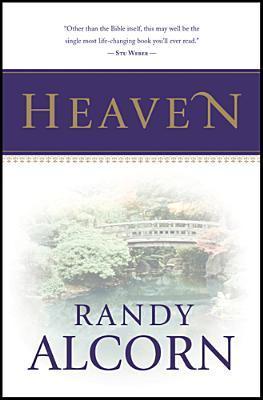
Randy Alcorn, of Eternal Perspective Ministries, wrote a masterful book on the subject, called, simply, Heaven. (It is a book that I highly recommend, and often give away to those facing death themselves or to those who have experienced a recent death of someone near and dear.)

I have to confess that when I first read Alcorn’s Heaven, I learned quite a bit that perhaps I should have already known.  One friend, who read the book at about the same time that I did, said it was “life changing” for him.  At first I thought that was a bit of an overstatement. But the more I thought about it I realized my friend just might be right.  After all, the better we understand what God has revealed about heaven, the more our thoughts and lives are oriented toward eternity. And the more our thoughts and hopes are oriented toward eternity, the less rooted they are in this present, broken and baffling world.

Alcorn, in a brief related article, addressed what he perceives to be the four biggest misconceptions about heaven:

Misconception 1: That the present Heaven, where Christians go when we die, is the same place we will live forever. In fact, when we die we go to be with Christ, which is wonderful, but we are incomplete, in a pre-resurrected state, anticipating Christ’s return to earth, and our resurrections. The place we’ll live forever will be where God comes down to dwell with us, on the New Earth (Revelation 21:1-3).

Misconception 2: The physical realm is evil, and God’s plan is to permanently destroy it and deliver our spirits to live without bodies. In fact, God created the physical realm and called it “very good.” He has never given up on his original plan for physical human beings to rule the earth for his glory. God sent his Son to permanently become a man and redeem and restore the physical universe-including our bodies and the earth-to become all He desires it to be. That’s why Jesus spoke of the “renewal of all things” (Matthew 19:27-28), and Peter preached that Christ will “remain in heaven until the time comes for God to restore everything, as he promised long ago through his holy prophets” (Acts 3:21). Isaiah and other prophets speak in detail about the Earth being returned to the perfection God designed for it. Speaking of an earthly kingdom, an angel reveals, “But the saints of the Most High will receive the kingdom and will possess it forever-yes, for ever and ever” (Daniel 7:18). This is not for a thousand years, but forever.

Misconception 3: There will be nothing to do, and it’ll be boring and predictable, without adventure, discovery, process and progress. This is as wrong as it could be, as I develop in the book.

Misconception 4: We’ll be absorbed with God and lose our identities. That is Hinduism, not Christianity, but surprisingly many Christians seem to believe it. In fact, resurrection means we will retain our identities and be forever reestablished as individuals, liberated to see God and worship him as our primary joy and the source of all derivative joys. Job said, “And after my skin has been destroyed, yet in my flesh I will see God; I myself will see him with my own eyes-I, and not another” (Job 19:26-27).

Solomon tells us, in Ecclesiastes 3.11: “God has made everything beautiful in its time. He has also set eternity in the human heart…” 

Let’s consider the eternity God has set in our hearts through  more biblical and less fantasy-laced lenses.

5 Reasons Why the Doctrine of Justification is Vital to the Church

The Great Apostle, Paul, wrote these profound words in his masterful treatise we know as the Book of Romans:

But now the righteousness of God has been manifested apart from the law, although the Law and the Prophets bear witness to it – the righteousness of God through faith in Jesus Christ for all who believe. For there is no distinction: for all have sinned and fall short of the glory of God,  and are justified by his grace as a gift, through the redemption that is in Christ Jesus, whom God put forward as a propitiation by his blood, to be received by faith.  (Romans 3.21-25)

The word “justification” is both biblical and practical. Because it is a biblical word, it not a word that should be ignored or merely glossed-over. It warrants our consideation, contemplation, and understanding. More than just being a biblical word, though, the concept of justification holds a central place in the message the Apostle is proclaiming. It is like the lynch-pin that holds together the various components of salvation.

Author and seminary professor Dustin Benge offers these thoughts to help us consider the doctrine of justification:

The doctrine of justification by faith alone is vital for the church:

1. It is essential for salvation: The Bible teaches that we are justified by faith in Jesus Christ, apart from any works we may do. Without this doctrine, we would have no assurance of our salvation.

2. It guards against legalism: Justification by faith alone guards against the idea that we can earn our salvation through good works or religious rituals. This protects us from the dangers of legalism, which can lead to self-righteousness and pride.

3. It upholds the sufficiency of Christ: By emphasizing that we are saved by faith in Christ alone, justification by faith alone upholds the sufficiency of Christ’s atoning work on the cross. It teaches that we cannot add anything to what Christ has already accomplished for us.

4. It promotes unity in the church: The doctrine of justification by faith alone promotes unity in the church, as it is a shared understanding of the gospel that transcends cultural and denominational differences.

5. It encourages evangelism: The doctrine of justification by faith alone provides a clear message of salvation to share with others. It encourages us to share the gospel with confidence, knowing that salvation is based on faith in Christ alone.

Overall, the doctrine of justification by faith alone is vital for the church because it is central to the gospel of Jesus Christ.

Finding My Place in the Story

The Bible comes to us in various forms of literature: history, poetry, and letters, just to name a few. But essentially, the Bible tells one epic story from beginning to end, using all the various genres.

Eugene Peterson, writing the introduction to Matthew in The Message, said:

“Every day we wake up in the middle of something that is already going on, that has been going on for a long time, genealogy and geology, history and culture, the cosmos – God. We are neither accidental nor incidental to the story. From it we get orientation, briefing, background, reassurance. Lacking such a context, we are in danger of seeing Jesus as a mere diversion from the concerns announced in the newspapers. Nothing could be further from the truth.”

The challenge is to find myself and my place in God’s great story of Redemption and Restoration.

Gospel-Driven Sanctification

by Jerry Bridges

Early in my Christian life I heard someone say, “The Bible was not given to increase your knowledge but to guide your conduct.” Later I came to realize that this statement was simplistic at best and erroneous at worst. The Bible is far more than a rulebook to follow. It is primarily the message of God’s saving grace through Jesus Christ, with everything in Scripture before the cross pointing to God’s redemptive work and everything after the cross–including our sanctification–flowing from that work.

There is an element of truth in this statement, however, and the Holy Spirit used it to help me to see that the Bible is not to be read just to gain knowledge. It is, indeed, to be obeyed and practically applied in our daily lives. As James says, “But be doers of the word, and not hearers only, deceiving yourselves” (James 1:22).

With my new insight, I prayed that God would use the Bible to guide my conduct. Then I began diligently to seek to obey it. I had never heard the phrase “the pursuit of holiness,” but that became my primary goal in life. Unfortunately, I made two mistakes. First, I assumed the Bible was something of a rulebook and that all I needed to do was to learn what it says and go do it. I knew nothing of the necessity of depending on the Holy Spirit for his guidance and enablement.

Still worse, I assumed that God’s acceptance of me and his blessing in my life depended on how well I did. I knew I was saved by grace through faith in Christ apart from any works. I had assurance of my salvation and expected to go to heaven when I died. But in my daily life, I thought God’s blessing depended on the practice of certain spiritual disciplines, such as having a daily quiet time and not knowingly committing any sin. I did not think this out but just unconsciously assumed it, given the Christian culture in which I lived. Yet it determined my attitude toward the Christian life.

Continue reading

What is Now True Because of Jesus

The Apostle Paul notably quipped:

“I am not ashamed of the gospel, for it is the power of God for salvation to everyone who believes…” (Romans 1.16)

The “gospel” is the message – the “Good News” – about the life, death, and resurrection of Jesus and of the Kingdom in and over which he reigns.. Paul is saying that the message has power – life-giving and life-transforming power to all who believe the message. Bible scholars will point out that the construct of the Greek word for “believe”, and the context within the sentence, express that the word carries a connotation of “on-going belief”. In other words, the aspect of salvation that we call “justification” occurs the moment one believes; and the on-going effect of salvation, the process of salvation we call “sanctification” occurs by the same power, and by on-going belief in the same message.

Properly speaking, the gospel message is about Jesus; but the fruit of the gospel becomes evident in those who are believing. The gospel is the power to change us. Certain things become true because of the gospel – because of Jesus. Here are a handful of passages describing what is now true because of the gospel:

John 5.24 – Truly, truly, I say to you, whoever hears my word and believes him who sent me has eternal life. He does not come into judgment, but has passed from death to life.

2 Corinthians 5.19 – In Christ God was reconciling the world to himself, not counting their trespasses against them, and entrusting to us the message of reconciliation.

Romans 5.1 – Therefore, since we have been justified by faith, we have peace with God through our Lord Jesus Christ.

Romans 8.1 –  There is therefore now no condemnation for those who are in Christ Jesus.

Romans 8.2 –  For the law of the Spirit of life has set you free in Christ Jesus from the law of sin and death.

Ephesians 1.5 – …he predestined us for adoption to himself as sons through Jesus Christ, according to the purpose of his will…

Ephesians 3.16-19 – …that according to the riches of his glory he may grant you to be strengthened with power through his Spirit in your inner being, 17 so that Christ may dwell in your hearts through faith—that you, being rooted and grounded in love, 18 may have strength to comprehend with all the saints what is the breadth and length and height and depth, 19 and to know the love of Christ that surpasses knowledge, that you may be filled with all the fullness of God.

Colossians 3.1-4 – If then you have been raised with Christ, seek the things that are above, where Christ is, seated at the right hand of God. Set your minds on things that are above, not on things that are on earth. For you have died, and your life is hidden with Christ in God. When Christ who is your[a] life appears, then you also will appear with him in glory.

1 John 4.7-12Beloved, let us love one another, for love is from God, and whoever loves has been born of God and knows God. Anyone who does not love does not know God, because God is love. In this the love of God was made manifest among us, that God sent his only Son into the world, so that we might live through him. 10 In this is love, not that we have loved God but that he loved us and sent his Son to be the propitiation for our sins. 11 Beloved, if God so loved us, we also ought to love one another.12 No one has ever seen God; if we love one another, God abides in us and his love is perfected in us.

Revelation 12.10-1110 And I heard a loud voice in heaven, saying, “Now the salvation and the power and the kingdom of our God and the authority of his Christ have come, for the accuser of our brothers has been thrown down, who accuses them day and night before our God. 11 And they have conquered him by the blood of the Lamb and by the word of their testimony, for they loved not their lives even unto death.

What We Celebrate At Christmas Is Why We Go to Church

As Christmas Day falls on a Sunday this year, church leaders across the country are making decisions about whether their respective congregation will hold services or forgo them. As one who holds a firm resolve about the prudency, even the appropriateness, of arbitrarily canceling services on any Sunday, no matter how noble-sounding the reasoning, I appreciate Grayson Gilbert’s thoughts on this matter, posted for Chorus In The Chaos:

Every set number of years, the church has an opportunity to gather with the saints on Christmas Day—and yet this often becomes a point of controversy for professing Christians. Some churches cancel services, while many others keep their doors open. I will admit at the onset of this that I believe those who shut their doors are not only doing a disservice to their congregants, but are in disobedience to the Scriptures.

The call to gather with the saints in the local assembly of believers is one that holds few exceptions to the rule. What has been traditionally held is that unless one is barred from attending church due to the providence of God or works of necessity, Christians should be among God’s people on the Lord’s Day (i.e., Sunday service). That time should be a designated time for all who profess faith in Christ simply because it is a time where the Spirit is uniquely present to work in and through His people as they serve one another, through the proclamation of the Word, the public reading of Scripture, corporate prayer, and congregational signing. In other words, unless we are providentially hindered or performing works of necessity, church attendance should be a non-negotiable to us. That is the general rule.

Continue reading

Shaped Through Suffering

“The suffering that comes to us is not random. It is not just the flow of chance events that careen along without a plan. It is not crazy coincidence. It is not haphazard and undirected. It is easy for us to see suffering as blind chance, or bad luck, or what others are doing to us. It is not karma, bad thing are not coming to us, because we have been bad to others. God makes it clear that all suffering comes according to God’s purposes in our lives. God is at work even when we cannot see him at work.”

~ Tedd Tripp

The Mystery of the Trinity (Satirically) Explained

Author Ray Pritchard offers these startling words with regard to the Christian Doctrine of the Trinity:

All Christians believe in the doctrine of the Trinity. If you do not believe this – that is, if you have come to a settled conclusion that the doctrine of the Trinity is not true – you are not a Christian at all. You are in fact a heretic. Those words may sound harsh, but they represent the judgment of the Christian church across the centuries. 

Pritchard wrote these words as a provocative opening to his digital article, God in Three Persons: A Doctrine We Barely Understand.

Pritchard’s words may be a bit shocking. But they are well founded. Affirming the Trinity is one of the non-negotiables of the Christian Faith. Yet, the doctrine of the Trinity is perhaps the most logically confusing among the many complex propositions of historic orthodox Christianity. It is so easy to take a step too far in almost any logical direction and find that we have fallen into a heresy.

I have long been a fan of Hans Fiene’s Lutheran Satire. And I particularly appreciate the humorous way he tackles the issue of the Trinity in this video. Take a moment to watch it.

For those wanting to ponder the definition Patrick finally rattles off in the end (and for which he is affirmed by Donall and Conall):

The Trinity is a mystery that cannot be comprehended by human reason but is understood by faith and is best confessed in the words of the Athanasian Creed which states that we worship one God in Trinity, and Trinity in Unity; neither confounding the Persons: nor dividing the Substance. That we are compelled by the Christian faith to confess that each distinct person is God and Lord and that the deity of the Father, the Son, and the Holy Spirit is one equal in glory, coequal in majesty.

Race & the Church RVA: The Church’s Commission

The third gathering of Race and the Church in Richmond, Virginia took place on Saturday May 14.  Featured speaker Leonce Crump addressed the diverse crowd on the subject of The Church’s Commission.

Leonce Crump’s bio, from the Race and the Church RVA web page:

Originally from Louisiana and raised Catholic, Léonce began following Jesus at age 16. Always an athlete and a talker, Léonce outran his first mall security guard (and pregnant mother) at age 3, and spent most of his grade school years talking with his principals on the subject of public speaking during class. He has been in ordained ministry for 9 years, is a graduate of the University of Oklahoma; and holds Masters degrees in Criminal Justice, with a focus on Case Law, from the University of Tennessee, Missional Leadership from the now defunct Resurgence Theological Training Center, an; is currently finishing his Masters of Divinity at Reformed Theological Seminary.

At Oklahoma he was an All-American wrestler and played a short while on the Sooner football team. He experienced an extended time of rebellion and running from God during college, but after 22 months of living as though he were not a Christian he surrendered to Jesus and ultimately to God’s calling into ministry. After college Léonce competed to make the world team in wrestling, played professional football for the New Orleans Saints and coached collegiate wrestling.

Prior to planting his present church, Léonce had served in 3 churches, starting and leading 3 college and young adult ministries. In 2006 he felt called to plant a church and settled on the under-served area of downtown Atlanta; and in early 2008 he and his wife began the process of planting Renovation Church, in partnership with  Acts 29 and Perimeter Church.

A prodigious reader and engaging speaker, Léonce regularly speaks and preaches across the country at conferences and churches of all denominations. Léonce enjoys boxing and MMA, studying theology, history, leadership, church structure and poetry. He likes Soul music, jazz/standards, and Bossaniva. He also loves to lift, keep up with wrestling, football, and rugby, playing with his kids, hanging with the homeless dudes.

To view the first two gatherings of Race and the Church RVA:

Knowing God

Thinking Man (B&W)

More than 200 names for God are recorded in the Bible.  All of them are important.  Each of them reveals and affirms certain characteristics of God.  While God is incomprehensible – we will never exhaust what there is to know about Him – He is nevertheless knowable.  He has revealed himself to us.  To know God is to recognize what He is like – and what He is not like.  As J.I. Packer once said:

“Those who know God have great thoughts of God.”

So what is God like?

This is not an academic question.  Though certainly there are some Academics in the news recently who may have been well served to have given a little more thought to the question before holding a press conference only to display syncretistic ignorance.  But even in that instance the question is not merely academic.  It is personal.

When asked: “What is the greatest commandment?”,  Jesus unhesitatingly declared: “You shall love the Lord your God with all your heart and with all your soul and with all your mind.”  (Matthew 22.36-40; Deuteronomy 6.1-7) So let me ask a somewhat rhetorical question: “How can one love God if little to nothing is known about God?  Further, even if it is possible to love a god one knows little about, (and I suspect that it may be possible,) how can we claim to be keeping the command to “Love God with all your mind” if we do not engage our minds to learn more and more about him?

Now let me be clear about something: If you are reading this post, and you feel you are less knowledgeable theologically than you think you ought to be, I am not trying to shame you.  Truth is this: I am fairly theologically educated.  If you have any knowledge of God at all, the difference between your little knowledge and my educated knowledge is so minimal when compared to what knowledge there is to be known about God, that any sense of haughtiness I might be inclined to project would be laughable, if such pomposity would not be so pathetic.  My concern is not who knows more than who, but rather whether we  know God, and whether, in keeping with the greatest command, we are engaging our minds to be continually growing in our knowledge of God.

If you have a desire to love the Lord with all your mind, let me offer a handful of suggested books about God with which to feed your mind.  None of these are technical, but all are excellent. (To my mind, these are actually better than most of the technical theological books I have read.)

This list is far from exhaustive. There are many excellent books on this subject, and I welcome anyone who would like to add to this list to do so in the comment section.  Sadly, there are many, many, bad books under this heading as well.  Some of the better books I left off this list are Knowing God by J.I. Packer and Reason for God by Timothy Keller.  While I enjoyed and highly commend both of these, the list above reflects a thorough introduction and/or reflection, yet easy reads.  Keller’s is excellent for those asking the question: Is There a God? Packer’s would be on my list for next steps.

I will end with this: Earlier this year I heard a statement, attributed to John Piper (though I have been unable to confirm it is his), that stuck with me, resonates, and is appropriate to ponder:

“The mind provides kindling for the heart.”

Role of the Holy Spirit

Holy Spirit (Blue, Yellow, Red)

The Holy Spirit is mysterious to many, perhaps especially to those in more intellectually inclined traditions. Most Christians probably understand that historic orthodoxy recognizes the Holy Spirit to be part of the Trinity, and therefore God, but I suspect many are somewhat less certain about what that means.  Often the Holy Spirit is referred to as a depersonalized “it” despite being the third person of the Trinity. Maybe even more questions surround what exactly the Holy Spirit does.

Some time ago I ran across a satirical confession of faith, one that ostensibly reflects the functional beliefs of a typcical American evanglical. Mimicking the pattern of the Apostle’s Creed, the clause regarding the the Holy Spirit declares:

And I believe in the Holy Ghost, who did some weird stuff at Pentecost, but doesn’t do much more anymore except speak to the hearts of individual believers.

How close to the experience or belief of most, I cannot say. But I suspect, and fear, that it is discomfortingly close to the functional belief of too many.

Recently I have enjoyed a four-part series of posts by Jon Payne from Sovereign Grace Ministries blog, titled: The Role of Holy Spirit. I commend them for a thoughtful introduction and overview:

  • Part 1 – Introduction
  • Part 2 – The Trouble With Nicodemus
  • Part 3 – Who is the Holy Spirit? and What Does He Do?
  • Part 4 – Transaction at the Fountain

I believe this series provides a good Introduction and/or refresher about this one who is often referred to as “The Shy Member of the Trinity”.  Hopefully it will whet your appetite to look further, and to study more deeply.

For those who are interested in digging into this subject, into this Person of the Holy Spirit, I would suggest two things:

First, stay away from some of the more bizarre claims by the likes of Benny Hinn, Perry Stone, Lester Summerall, and others from the Name-It-Claim-It camp, who refer to themselves as “Full Gospel” Christians.  More often than not, there is little gospel reflected in the writings of these folks – at least not the gospel of the Bible.  (See Galatians 1.6-9)  These, at best, offer fascinations that lead away from the Cross.

Second, delve into a copy of one or more of the following books.  This list is hardly exhaustive, but I think all of these provide substantive and sound insights about the Holy Spirit:

Can Anyone Really Know What the Bible Actually Says?

In many ways it seems to be seen as the conversation stopper, the ultimate trump card.  Whenever a skeptic wants to take control of a spiritual conversation, the question gets tossed up like an impenetrable forcefield: With all the different translations and interpretations out there, how can anyone really know what the Bible says.

Of course sometimes it is not a conversation stopper, but a conversation starter. A person genuinely seeking, but perhaps confused or overwhelmed by all the Bible has to say may ask this very question.  Such a person may hope that there is an answer.  The good news is that there is an answer, and that the answer is “Yes”.

In this short 3-minute-plus video, Michael Horton tackles this question and gives a thoughtful response.