The Awakened Sinner

O my forgetful soul, Awake from thy wandering dream; turn from chasing vanities, look inward, forward, upward, view thyself, reflect upon thyself,  who and what thou art, why here, what thou must soon be.  Thou art a creature of God, formed and furnished by him, lodged in a body like a shepherd in his tent; Dost thou not desire to know God’s ways?

O God, Thou injured, neglected, provoked Benefactor, when I think upon your greatness and your goodness  I am ashamed at my insensibility, I blush to lift up my face, for I have foolishly erred.  Shall I go on neglecting you, when every one of thy rational creatures should love thee, and take every care to please thee?

I confess that thou hast not been in all my thoughts, that the knowledge of you as the goal of my being has been strangely overlooked, that I have rarely seriously considered my heart-need.  But although my mind is perplexed and divided, and my nature perverse, yet my secret dispositions still desire you.

Let me not delay to come to thee; Break the fatal enchantment that binds my evil affections, and bring me to a happy mind that rests in thee, for thou hast made me and canst not forget me.

Let thy Spirit teach me the vital lessons of Christ, for I am slow to learn…

…And hear thou my broken cries.

~ adapted from Valley of Vision

Brokeness, Contrition, and Repentance = Marks of a Growing Christian

“So Repentance begins with an attitude of brokenness over our sin. But true repentance will be followed by an earnest desire and a sincere effort to put away  the sin we are repenting of – to put on the Christlike virtues that we see missing in our lives. These efforts often seem to be characterized by failure as much as by success. But the frequent failures should bring us back to a broken and contrite heart that mourns over our sin. Brokenness, contrition, and repentance are all marks of a growing Christian, a person who is experiencing the work of the Spirit in being transformed gradually more into the image of God’s Son.”

~ Jerry Bridges, The Transforming Power of the Gospel

The Difference That Makes All the Difference

Francis Schaeffer, of his own testimony, writes:

“I became a Christian once for all upon the basis of the finished work of Christ through faith; that is justification. The Christian life, sanctification, operates on the same basis, but moment by moment. There is the same base (Christ’s work) and the same instrument (faith); the only difference is that one is once for all and the other is moment by moment…  If we try to live the Christian life in our own strength we will have sorrow, but if we live in this way, we will not only serve the Lord, but in place of sorrow, He will be our song. That is the difference. The ‘how’ of the Christian life is the power of the crucified and risen Lord, through the agency of the indwelling Holy Spirit, by faith moment by moment.”

An important -even essential – distinction. It’s not just for the sake of doctrinal precision. It makes all the difference in how we live out our lives.

Resurrection

O GOD OF MY EXODUS,
Great was the joy of Israel’s sons
when Egypt died upon the shore,
Far greater the joy
when the Redeemer’s foe lay crushed in the dust.
Jesus strides forth as the victor,
conqueror of death, hell, and all opposing might;
He bursts the bands of death,
tramples the powers of darkness down,
and lives for ever.

He, my gracious surety,
apprehended for payment of my debt,
comes forth from the prison house of the grave
free, and triumphant over sin, Satan, and death.

Show me herein the proof that his vicarious offering is accepted,
that the claims of justice are satisfied,
that the devil’s sceptre is shivered,
that his wrongful throne is levelled.

Give me the assurance that in Christ I died, in Him I rose,
in His life I live, in His victory I triumph,
in His ascension I shall be glorified.

Adorable Redeemer,
Thou who wast lifted up upon a cross
art ascended to highest heaven.
Thou, who as man of sorrows wast crowned with thorns,
art now as Lord of life wreathed with glory.
Once, no shame more deep than Thine,
no agony more bitter, no death more cruel.
Now, no exaltation more high,
no life more glorious, no advocate more effective.

Thou art in the triumph car leading captive Thine enemies behind Thee.
What more could be done than Thou hast done!
Thy death is my life, Thy resurrection my peace,
Thy ascension my hope, Thy prayers my comfort.

from: Valley of Vision

Crucifixion & Resurrection

Here is a reflection, taken from Valley of Vision, for Good Friday:

O Lord,
I marvel that thou shouldst become incarnate,
be crucified, dead, and buried.

The sepulchre calls forth my adoring wonder,
for it is empty and thou art risen;
the four-fold gospel attests it,
the living witnesses prove it,
my heart’s experience knows it.

Give me to die with thee that I may rise to new life,
for I wish to be as dead and buried to sin, to selfishness, to the world;
that I might not hear the voice of the charmer,
and might be delivered from his lusts.

O Lord, there is much ill about me – crucify it,
much flesh within me – mortify it.
Purge me from selfishness,
the fear of man, the love of approbation,
the shame of being thought old-fashioned,
the desire to be cultivated or modern.
Let me reckon my old life dead
because of crucifixion,
and never feed it as a living thing.
Grant me to stand with my dying Saviour,
to be content to be rejected,
to be willing to take up unpopular truths,
and to hold fast despised teachings until death.
Help me to be resolute and Christ-contained.
Never let me wander from the path of obedience to thy will.
Strengthen me for the battles ahead.
Give me courage for all the trials,
and grace for all the joys.
Help me to be a holy, happy person,
free from every wrong desire,
from everything contrary to thy mind.
Grant me more and more of the resurrection life:
may it rule me,
may I walk in its power,
and be strengthened through its influence.

Revised Resolutions of Jonathan Edwards

As a young man – a teenager, really – Jonathan Edwards set down on paper a series of thoughts and practices to help cultivate growth in grace.  (See 2 Peter 3.18)  Edwards then re-read this list at least once a week to keep his mind focused and renewed.  The result: A man of humble godliness, who was to become a significant spark used to ignite one of the greatest revivals known to history.  Even many unbelieving scholars admit Edwards may have been the greatest mind to have been born on the North American continent.

The Resolutions of Jonathan Edwards are still a practical and beneficial tool for spiritual cultivation.  But one problem for many is that the early 18th Century language makes it sometimes difficult to grasp what Edwards wrote.   I have taken it upon myself to attempt to translate Edwards’ meaning in hopes that these resolutions might be used by some who might otherwise feel discouraged by the archaic words.  And while I admit that there are a few of these resolutions that I cannot embrace, I will leave it to each individual to pick out anything that might seem worthy for adoption among his/her own personal resolutions.

***

Aware that I am unable to do anything without God’s help, I do pray that, by his grace, he will enable me to keep these Resolutions, so far as they are in line with his will, and that they will honor Christ.

NOTE: Remember to read over these Resolutions once a week.

1. Resolved:  I will DO whatever I think will be most to God’s glory; and my own good, profit and pleasure, for as long as I live. I will do all these things without any consideration of the time they take.  Resolved: to do whatever I understand to be my duty and will provide the most good and benefit to mankind in general. Resolved to do this, whatever difficulties I encounter, and no matter how many I experience or how severe they may be.

2. Resolved: I will continually endeavor to find new ways to practice and promote the things from Resolution 1.

3. Resolved: If ever – really, whenever – I fail & fall and/or grow weary & dull; whenever I begin to neglect the keeping of any part of these Resolutions; I will repent of  everything I can remember that I have violated or neglected, …as soon as I come to my senses again.

4. Resolved: Never to do anything, whether physically or spiritually, except what glorifies God.  In fact, I resolve not only to this commitment, but I resolve not to to even grieve and gripe about these things, …if I can avoid it.

5. Resolved: Never lose one moment of time; but seize the time to use it in the most profitable way I possibly can.

6. Resolved: To live with all my might, …while I do live.

7. Resolved: Never to do anything which I would be afraid to do if it were the last hour of my life.

8. Resolved: To act, in all respects, both in speaking and doing, as if nobody had ever been as sinful as I am; and when I encounter sin in others, I will feel (at least in my own mind& heart) as if I had committed the same sins, or had the same weaknesses or failings as others.  I will use the knowledge of their failings to promote nothing but humility – even shame – in myself. I will use awareness of their sinfulness and weakness only as an occasion to confess my own sins and misery to God.

9. Resolved: To think much, on all occasions, about my own dying, and of the common things which are involved with and surround death.

10. Resolved: When I feel pain, to think of the pains of martyrdom – both of Jesus and of Believers around the world;  and remind myself of the reality of hell.

11. Resolved:  When I think of any theological question to be resolved, I will immediately do whatever I can to solve it, … if circumstances don’t hinder.

12. Resolved: If I find myself taking delight in any gratification of pride or vanity, or on any other such empty virtue, I will immediately discard this gratification.

13. Resolved: To be endeavoring to discover worthy objects of charity and liberality.

14. Resolved: Never to do anything out of revenge.

15. Resolved: Never to suffer the least emotions of anger about irrational beings.

16. Resolved: Never to speak evil of anyone, except if it is necessary for some real good.

17. Resolved: I will live in such a way as I will wish I had done when I come to die.

18. Resolved: To live, at all times, in those ways I think are best in me during my most spiritual moments and seasons – those times when I have clearest understanding of the gospel and awareness of the World that is to come.

Continue reading

The Old Man and the Flesh

by Robin Boisvert

What actually changes when one becomes a Christian?  Confusion about this is common, especially when we realize that we continue to struggle with sin and temptation even after conversion.  Paul tells us in Galatians that we have a war that goes on within us after conversion: “For the desires of the flesh are against the Spirit, and the desires of the Spirit are against the flesh, for these are opposed to each other, to keep you from doing the things you want to do. ” (Galatians 5.17)   In this short essay Robin Boisvert helps bring some clarity.  ~ WDG

***

Some of the terms which the apostle Paul uses in discussing the believer’s relationship to sin can cause confusion. I’m speaking of terms such as “old man,” “new man,” “body of sin,” “flesh,” and others. These can be difficult to understand. Add to this the variations which modern translators have given these words and the subject can appear daunting.

We know a profound change has occurred in the life of the believer through conversion, but just how has the believer changed?

For we know that our old self was crucified with him so that the body of sin might be done away with, that we should no longer be slaves to sin — because anyone who has died has been freed from sin. (Romans 6.6-7, emphasis added)

Let’s begin by trying to define our terms. “Old man” (as it is translated in the King James Version and American Standard Version) is equivalent to “old self”  (NIV, NASV).  This term refers to the unregenerate life we lived before we were converted. As John R.W. Stott has written, the old self “denotes not our old unregenerate nature [flesh], but our old unregenerate life. Not my lower self, but my former self. So what was crucified with Christ was not a part of me called my ‘old nature’, but the whole of me as I was before I was converted.”1  John Murray’s definition concurs:

“‘Old man’ is a designation of the person in his unity as dominated by the flesh and sin.”2

It’s important for us to see that the believer is not at the same time an “old self” and a “new self,” alternately dominated and directed by one or the other. We are indebted again to Murray’s insight:

The old man is the unregenerate man; the new man is the regenerate man created in Christ Jesus unto good works. It is no more feasible to call the believer a new man and an old man, than it is to call him a regenerate man and an unregenerate.  And neither is it warranted to speak of the believer as having in him the old man and the new man. 3

Thus, terms like “old man,” “old self,” “unregenerate life,” and “former self” are synonymous, all referring to the entity that was crucified with Christ.

Notice two significant grammatical features of the passage from Romans 6 cited above. First, the verb is used in the past tense: “our old self  crucified…” The crucifixion of the old self is a finished fact. Second, the verb is also passive in voice, meaning that the subject (our old self) is being acted upon. In other words, the crucifixion of the old self is not something we must do, but something that is done to us.

Another important concept in the biblical doctrine of sanctification has traditionally been designated by the word “flesh” (King James Version). The New International Version uses “sinful nature.” According to Stott, “flesh” refers to a “lower” nature, that part of our being inclined toward rebellion against God. This is that part of you that wants to pass on a juicy bit of gossip; that urges you to take a second look at the  immodest images on the television screen. “Whatever we may call this tendency [“indwelling sin,” 4 “remnants of corruption,”5 “vestiges of sin,”6 or “my sinful nature”7]  we must remember that even after we have been regenerated we still have such sinful impulses, and must still fight against them as long as we live.” 8

In Romans 6.6 Paul calls our sinful nature (i.e. flesh) the “body of sin.” He says our old self was crucified with Christ so that this “body of sin might be done away with…” To be “done away with” here means to be put out of action, rendered powerless. It does not mean to be annihilated, gone without a trace. But our sinful nature’s mastery over us has been broken.

Some, not understanding the distinction between the “old self” and the “sinful nature” have gotten Romans 6.6 confused with Galatians 5.24, which also speaks of crucifixion and the believer. Consider two translations of this verse:

  •  Those who belong to Christ Jesus have crucified the sinful nature with its passions and desires. (Galatians 5.24 NIV)
  •  And they that are Christ’s have crucified the flesh with the affections and lusts. (Galatians 5.24 KJV)

Though helpless to take anything but a passive stance in regard to the old self (Romans 6.6), we do have an active part to play, as the Galatians learned, in the subjugation of the flesh. Stott sums this up with characteristic clarity:

 First, we have been crucified with Christ; but then we not only have decisively crucified (i.e. repudiated) the flesh with its passions and desires, but we take up our cross daily  and follow Christ to crucifixion (Luke 9.23). The first is a legal death, a death to the penalty of sin; the second is a moral death, a death to the power of sin. The first belongs to the past, and is unique and unrepeatable: I died (in Christ) to sin once. The second belongs to the present, and is continuous and repeatable: I die (like Christ) to self daily. It is with the first of these two that Romans 6 is concerned. 9

And Galatians 5 is concerned with the second.

So the old self has been dealt with. In its place we have been given a new self: “Therefore, if anyone is in Christ, he is a new creation; the old has gone, the new has come!” (2 Corinthians 5.17). And while our sinful nature (the flesh, indwelling sin, etc.) is still very much with us, its dominion over us has ended.

Continue reading

Appropriating the Justifying Work of Christ

Only a fraction of the present body of professing Christians are solidly appropriating the justifying work of Christ in their lives.

Many have so light an apprehension of God’s holiness and of the extent and guilt of their sin, that consciously they see little need for justification. Below the surface, however, they are deeply guilt-ridden and insecure. Many others have a theoretical commitment to this doctrine, but in their day-to-day existence they rely on their sanctification for justification….drawing their assurance of acceptance with God from their sincerity…their recent religious performance or the relative infrequency of their conscious, willful disobedience.

Few start each day with a thoroughgoing stand upon Luther’s platform: you are accepted, looking outward in faith and claiming the wholly alien righteousness of Christ as the only ground for acceptance, relaxing in that quality of trust which will produce increasing sanctification as faith is active in love and gratitude.

~ Richard Lovelace, Dynamics of Spiritual Life

Poem of Your Life

The Bible tells us that each of our lives tell a story.  We are like masterpieces of God’s artistry.  The greek word is poiema, from which we get our English word “poem”. 

In this video Phil Keaggy joins Michael Card to play Poem of Your Life, a Celtic-ish piece from Card’ album Poiema.

Life is a song we must sing with our days/A poem with meaning more than words can say/A painting with colors no rainbow can tell/A lyric that rhymes either heaven or hell

We are living letters that doubt desecrates/We’re the notes of the song of the chorus of faith/God shapes every second of our little lives/And minds every minute as the universe waits by

CHORUS:  The pain and the longing/The joy and the moments of light/Are the rhythm and rhyme/The free verse of the poem of life

So look in the mirror and pray for the grace/To tear off the mask, see the art of your face/Open your ear lids to hear the sweet song/Of each moment that passes and pray to prolong

Your time in the ball of the dance of your days/Your canvas of colors of moments ablaze/With all that is holy/With the joy and the strife/With the rhythm and rhyme of the poem of your life/With the rhythm and rhyme of the poem of your life

Introduction to Alliance of Confessing Evangelicals

I have benefitted tremendously from the Alliance of Confessing Evangelicals, from the depth and richness of the writings and the broadcasts of several of the members.  So I thought I would post this introductory video for anyone who may not be familiar with this network.

Alliance of Confessing Evangelicals is a cross denominational organization in which members from several Christian traditions come together united by their common commitment to the the gospel.  These guys (and ladies) genuinely reflect Paul’s words: “I am not ashamed of the gospel.”  (Romans 1.16)

Each of the members also comes from a tradition that has a recorded summary of their faith, expressed in various confessions of faith. These doctrinal statements vary on some secondary points, but each offers a wonderfully unique perspective on the gospel, and on the Christian faith.

The goal of the Alliance is to work toward a Second Reformation, or rather to work for a continued reformation of the church; to constantly see Christ’s Church more and more conformed to God’s revelation in the Scripture. 

Check out these Alliance links:

The Original Missional Calvinist

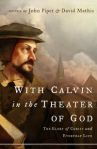
John Calvin often gets a bad rap.  But David Mathis offers us another perspective.  In the Introduction to a book he co-edited with John Piper, With Calvin in the Theater of God, Mathis writes:

“Calvin so believed in the importance of the everyday activities of Christian life and mission that he had a strange but telling practice in Geneva. He was eager to see Jesus’ church gathered on Sundays, but he was not happy for his flock to retreat from everyday life and hide within the walls of the church during the week. So to prod his congregants to be fully engaged in their city of Geneva – in their families, in their jobs, with their neighbors and coworkers – he locked the church doors during the week. It must have been hard not to get the point. He knew the place of God’s people – gathered together to worship on Sunday, but during the week not hidden away behind thick walls of separation, but on mission together in God’s world, laboring to bring the gospel to metro Geneva in their words and actions, in all their roles and relationships.”

Critics who suggest Calvinism discourages evangelism and is inherently anti-mission might want to rethink their attitudes about the reformer.  Calvin’s outwardly focused missional mindset ought to be applauded, and in many cases even adopted.  While Mark Driscoll has popularized the term Reformissional, John Calvin was the original Reformission Rev.

NOTE: The entire book can be uploaded and read free.  Click: With Calvin in the Theater of God

Revival: The Restoration of the Holy Spirit to This Place

To understand aright what this teaching of the Spirit is, there are three things we must specially remember:

 The first, that it is all from within. It is by influencing, by renewing, by purifying the life, that the Spirit gives the experimental knowledge of God’s truth. Out of the light of life, wrought within our feeling and willing and acting, spiritual wisdom and understanding is born.

The second, that this power and energy of the Spirit is given on one condition — that of entire possession. As a teacher can not teach unless he has the undivided attention of his pupil, the Holy Spirit demands the entire control of the life. A great deal of prayer for the teaching or the filling of the Spirit is vain, because the seeker is not faithful in obedience to that measure of the Spirit which he already has. The Spirit claims our whole being.

And the third essential element in the teaching is that it is only communicated and to be received by faith. The movings of the Spirit cannot be known or felt until we begin to act. It is when, while feeling our weakness, we believe in the hidden presence and power within us and begin to act, that his guidance and strength are known. Faith in his indwelling and most certain leading, much faith in the Father who works by the Spirit, unceasing faith in the Lord Jesus, in union with whom we have the Spirit flowing through us — this faith will receive the fullness of the Spirit. This is the revival we must seek for, the restoration of the Holy Spirit to his place as the inward teacher, having complete possession and control of heart and life.

Excerpted from Andrew Murray‘s  Coming Revival

Elect or Elite?

A few years ago, soon after coming to Bristol, I was asked by a godly woman in our church: “What does it mean to be Reformed?”

She had been talking with someone from another church who had snidely claimed that their church did not associate with our church because we were not Reformed enough.

What arrogance!

My response to the inquiring woman was that we were not a TR church (Thoroughly Reformed), but we want to be a HR church (Humbly Reformed).  What’s the difference? Not substance.  Attitude.

Elliot Grudem offers a wonderful encouragement to cultivate an HR attitude, in an article from the Acts 29 Network blog: Elect or Elite? Why Arrogance Has No Place in Reformed Theology. Below is an edited version of Grudem’s message.  To read the original, or to hear the audio message delivered at an Acts 29 Bootcamp, click the link.

***

Keller, Calvin, Predestination – BINGO!

When I was in seminary, my friends and I would occasionally play bingo during the classes: what we’d do is write the names of people in our class in the bingo squares, and if that person spoke in class, you got that square – and if you got all the squares in a row then you got ‘bingo.’ We’d always make sure we filled our squares with a couple of ringers that we knew we could get to talk by tipping off their hot-button issues. So if you needed the ringer’s name, you’d ask a questions like, “can someone please tell me what this has to do with homeschooling?” and you knew that individual would ask the next question – and – BINGO!

We do something similar in Reformed circles.  We have our key names and key phrases that fill our “bingo board” in our minds. And if people mention Keller and Calvin, and “the gospel” two or three times, if they say “predestination” then we think they’re orthodox.

And if they miss those things – the key phrases and names that make up what we think it means to be Reformed – then we say they’re not Reformed, they’re not “gospel-centered,” they’re not orthodox, regardless of what they have really said.

Are We Elect or Elite?

We can rely on our theology too much, thinking that our theological precision is the key to our church’s growth rather than the Holy Spirit. We can fall into phrase-righteousness or name-righteousness thinking that a sermon is heretical if it sounds more like it came from the book of James than from one of Paul’s epistles. We can begin to think that the reason our church is small is because we’re right. And we’re the only one in town that’s truly preaching the truth. We can become theological snobs believing that we and our two or three heroes have a corner on right theology. Or that the Holy Spirit stopped speaking to the church on May 27, 1564 – the day that Calvin died.

We have a word for people like that, don’t we? The word is proud.

But unfortunately in our circles we tend to see this type of pride, especially among those who have just discovered the truths of the Reformed tradition.  It doesn’t take much to move from elect to elite.

But it shouldn’t be that way.

What Does it mean to be Humbly Reformed?

To be Reformed one does have to hold to a Reformed soteriology.  But if we’re not talking Reformed Bingo phrase-dropping, what do we mean by that?

J.I. Packer sums it up: “To Calvinism there is really only one point to be made in the field of soteriology: the point that God saves sinners.”

Packer is saying that salvation is entirely of the Lord, and sinners have nothing to do with their salvation. That God saves you out of his own good pleasure as an act of his delight. Sinners do not save themselves in any sense at all. Every step is an act of grace. Salvation is entirely an act of God.

What room does this gospel of grace leave you to boast? What room does it leave you for self-promotion? What need do you have to prove yourself to God and others? If what Paul writes is true, you have none.

If you really understand this gospel, this message that “God saves sinners,” and really understand Reformed soteriology, then you should be known for your humility, not your pride. You know that everything you have is a gift of grace.

And the Answer Is…

John Frame is the Chuck Norris of Systematic Theology, and he also is one of the nicest people you’ll ever meet. Once I heard him ask a question of a man when I was with him during a mock ordination exam. I don’t remember what Frame’s question was but the student took a long time before giving a faltering answer. And Frame laughed and said “that is the best answer I have ever heard in any type of theology exam.”

What was the student’s answer to the question? “I don’t know.”

When’s the last time you answered a question like that? Are you really that good? Are there secret things that belong to the Lord? Or is it, like, the Lord and you? How long has it been since you answered a question with ‘I don’t know’?

***

By the way, when I was in seminary my friend David Zavadil and I also played BINGO during classes.  We became somewhat infamous for it.  I guess our tradition lived on… and spread.

Practical Importance of Doctrine

If there was one thing I could impart to the members of our church, or to other pastors, it would be an appreciation for the practical importance of doctrine.  I think it was R.C. Sproul who pointed out: “We are all theologians… the question is whether we are good theologians.”

Sprouls’ point is valid.  Everything we think, feel, and do is rooted in what we think about God.  Some may not give this conscious attention. Some even repress it or deny it, but then this a-theism is what they think or feel about God, and these folks will act accordingly.

I suppose that many are turned off by the very idea of doctrine because it has been abused so frequently. I imagine others have been guilty of taking these awesome truths and boring folks with them – something I am sure I share a guilt in.  But the inadequacies of a teacher should not turn people away from seeking to know God better by knowing about God, any more than a bad meal or a bad cook should make people turn away from food.

In this brief video, pastor/theologian Tim Keller offers a few simple insights about the practical importance of doctrine.  Even if you are a skeptic, give what Tim says at least a few moments thought.