Puritan Perspective Pertaining to Our Present Pandemic

Pandemic2

Puritan Thomas Watson, in his Body of Divinity, gave thought to circumstances that presently pertain to us today in the midst of pandemic. Perhaps most particularly for Americans, who have been blessed with a measure of freedoms rarely matched, and certainly never exceeded, in all of history, the current “stay at home” mandates by a number of our Nations governors causes many to chafe.  There is a feared oppression of religious freedoms. Whether those fears are valid or merely presumed may yet to be determined.

Watson wrote, applying the 6th Commandment:

“Thou shalt not hurt thy own body.  One may be guilty of self-murder…  Indirectly and occasionally, as:

First, When a man thrusts himself into danger which he might prevent; as if a company of archers were shooting, and one should go and stand in the place where the arrows fly, if the arrow did kill him, he is accessory to his own death.

In the law, God would have the leper shut up, to keep others from being infected. Now, if any would be so presumptuous as to go in to the leper, and get the plague of leprosy, he might thank himself; he occasioned his own death.

Secondly, A person may be in some sense guilty of his own death, by neglecting the use of means.  If sick, and use no physic, if he has received a wound and will not apply balsam, he hastens his own death.  God appointed Hezekiah to lay a “lump of figs upon the boil”. (Isaiah 38.21)  If he had not used the lump of figs, he had been the cause of his own death.

And on the 7th Commandment:

Come not into the company of a whorish woman; avoid her house, as a seaman does a rock. Proverbs 5.8: “Come not near the door of her house.”  He who would not have the plague, must not come near houses infected; every whore-house has the plague in it.

Not to beware of the occasion of sin, and yet pray, “Lead us not into temptation,” is, as if one should put his finger into the candle, and yet pray that it may not be burnt.

Thoughts During a Pandemic

Scottish Puritan Jeremiah Burroughs mused:

All men are afraid of afflictions and troubled at affliction, but where is the man or woman that fears sin and flies from the serpent, and is troubled at sin more than any affliction?

It got me thinking. What if I borrowed and re-purposed Burroughs’ question:

All are afraid of affliction and troubled by the fear of this virus. But where is the man or woman who fears sin and is troubled by sin more than he or she is troubled by and fears  the coronavirus?  Where is the man or woman who is as vigorous about protecting our hearts from the infection of sin within as we are presently about washing our hands and covering our faces to prevent the virus from infecting our lungs?

An even more immediate crucial question: Am I such a man?

Note to Self During Our Viral Outbreak

Luther Plague

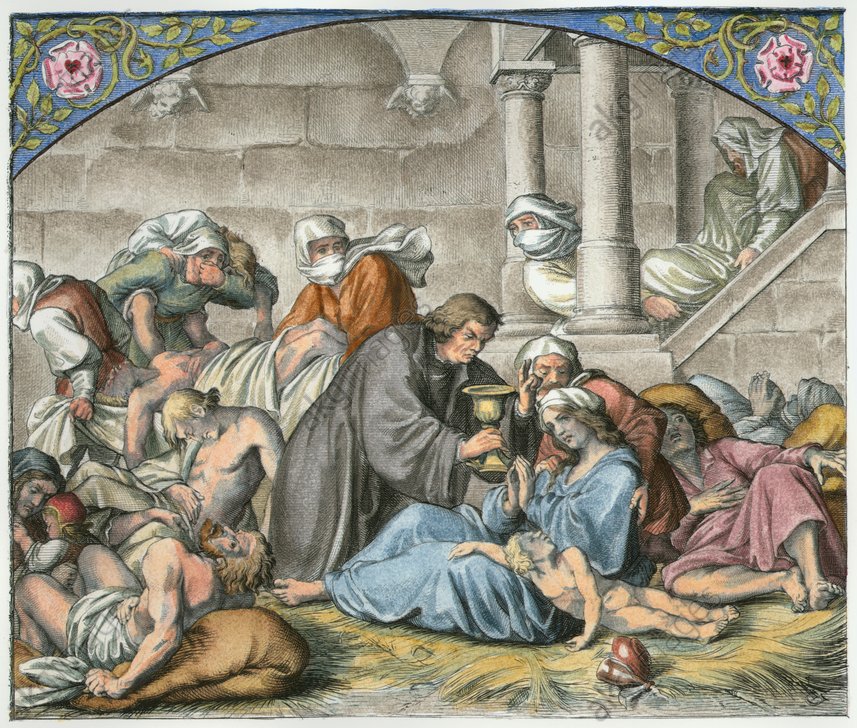
I admire Martin Luther’s attitude in the midst of the bubonic plague:

“I shall ask God be merciful to protect us. Then I shall fumigate, help purify the air, administer medicine and take it. I shall avoid places and persons where my presence is not needed in order not to become contaminated and thus perchance inflict and pollute others and so cause their death as a result of my negligence. If God should wish to take me, He will surely find me, and I have done what He has expected of me and so I am not responsible for either my own death or the death of others. If my neighbor needs me, however, I shall not avoid place or person. I shall go freely… See this is such a God-fearing faith because it is neither brash nor foolhardy and does not tempt God.”

Note to Self: May I live to honor God by loving and serving my neighbors to the best of my abilities during our present health crisis.

Repenting of Toxic Masculinity

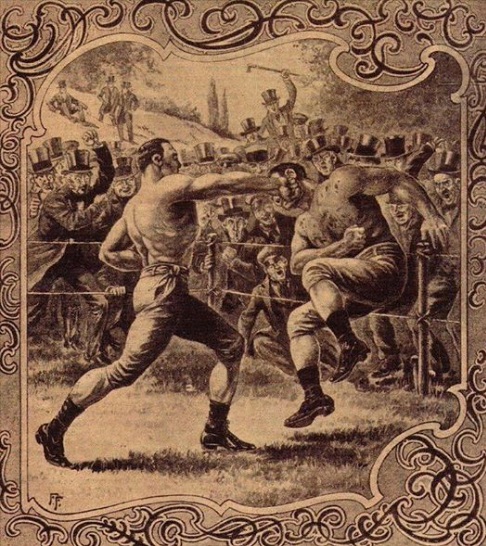
bare knuckle

Columnist Ross Douthat, in response to recent discussions about “toxic masculinity”, penned a piece for the New York Times, In Search of Non-Toxic Manhood.

One of the frustrating tics of our society’s progressive vanguard is the assumption that every evil it discovers was entirely invisible in the past, that this generation is the first to wrestle with dominance and cruelty.

This forgetting of human experience, this perpetual present-tenseness, pervades the latest flashpoint in the culture war over the sexes — the new guidelines for treating male pathology from the American Psychological Association.

The trouble with men, the guidelines argue, is that they’re violent and reckless, far more likely than women to end up in prison or dead before their time. But the deeper problem is they’re prisoners of “traditional masculinity,” which the guidelines describe as a model of manhood marked by “emotional stoicism, homophobia, not showing vulnerability, self-reliance and competitiveness.” This tough-guy ideal encourages “aggression and violence as a means to resolve interpersonal conflict,” and tempts men toward rape, drug abuse and suicide.

Douthat’s OpEd reminded me of an article I had read several years ago, written by Kyle Worley for Council on Biblical Manhood and Womanhood (CBMW) titled Repenting From ‘Biblical’ Manhood. It was the 10th and final part of a series titled Manhood Marred.  The series explored a variety of ways that sin has corrupted, or marred, manhood.  So in a very real sense, CBMW was way ahead of the American Psychological Association – and Gillette Razors.

In Repenting From ‘Biblical’ Manhood, Worley introduces the subject with these words:

While we firmly believe that God has ordained complementarianism as the governing sexual and marital ethic of the Christian life, we acknowledge that a corrupt complementarianism and those false ways of living that some may have treacherously called ‘biblical’ manhood have led to the perversion of the wonderful truth that God has laid out for human flourishing in the home, in the church, and in the culture.

Worley continues:

So, in the vein of those prophets who plead for the sins of their kinsman, it is time that we corporately repent and lament the perverseness of a manhood that has been shaped by sin and not by the authority of Scripture.

Then, in the “vein of the prophets”, Worley offers the following memorable, and beautifully humble, prayer of confession and repentance:

Lord, We confess that we are broken and are in need of your grace. May you draw our gaze to the God-man Jesus Christ and the full scope of scripture as the authoritative revelation for what biblical manhood should resemble.

  • We repent for the sins of our passive brothers, unwilling to lead when it counts.
  • We repent for the sins of our chauvinist brothers, covering up abuse in the name of authority and male leadership.
  • We repent for the sins of our brothers who refuse to grow up, Lord would you call them to greater maturity.
  • We repent for any machismo that has seeped into our churches, may we be disgusted with misogyny in all its forms.
  • We repent for men who are trying to escape from the responsibilities you have entrusted to them, may they find joy in their stewardship.
  • We repent for men who are attempting to “lone wolf” their lives, Lord may they find your church as beautiful as you do.
  • We repent for men unwilling to sacrifice their control and comfort to lead in all spheres of life, may they look to He who laid down His life for His bride.
  • We repent for men who are so jaded with cynicism that they lose love for the King and hope for his coming kingdom.

We pray that you would rescue women who are trapped in abuse and that you would crush the purposes of abusers who treacherously call themselves “complementarians” or “biblical men.” Bring them to repentance and comfort those who have been bruised and broken beneath their hands.

We pray for those men who are trapped in sexual immorality. Lord, would you break the chains of pornography in the life of the church. Those wicked chains that place men in shackles next to the sex trafficking victims, pornographers, and orphaned.

We pray that you would continue to renew a movement towards good, beautiful, and true complementarian practice. May the witness of those men and women who have been created in your image, given distinct roles in the world, and who treasure the gospel tell the true story of complementarianism. May the lies that creep in under the banner of complementarianism in churches, homes, and communities across the world be crushed by this witness.

Comfort the woman abused, the child orphaned, the widowed mother, the widowed father, the church filled with faithful women.

Comfort the young woman not righteously pursued, the young boy with no father to learn from, the wife who serves the belligerent and lazy husband.

Confront those trapped in sexual immorality, confront churches filled with passive men, confront the young men unwilling to grow up.

Crush abortion, crush the movement to undermine the beauty of Christian covenant marriage, crush the porn industry, crush abuse at home and in the church.

Come, Lord! Come, Lord! Come, Lord, would you come?

To borrow a theme and turn a phrase, “CBMW was anti toxic masculinity before toxic masculinity was un-cool”.  We would do well, and it would be timely, for the Church to reaffirm our commitments, and acknowledge our failures on this front; humbly repenting before our Holy God, and prophetically proclaiming God’s design for masculinity rather than leaving the final word to the APA, or to some other organization.

Racial Superiority is a Rejection of the Gospel

While opinions about the rise of racial tensions are many and varied, I find that I agree with these words from Al Mohler:

“Any concept of racial or ethnic superiority is a rejection of the gospel of Christ – the great good news of God’s saving purpose in the atonement accomplished by Christ. A claim of racial superiority denies our common humanity, our common sinfulness, our common salvation through faith in Christ, and God’s purpose to create a common new humanity in Christ.”

Sasse Speaks to The Gospel Coalition

Senator Ben Sasse (R – Nebraska) addresses The Gospel Coalition 2017 Conference, with an address titled: What Has Washington to Do With Jerusalem?.

Sasse, a vocal opponent of Donald Trump as his party’s presidential nominee during the 2016 election, speaks refreshingly and intentionally non-partisan about the distorted role politics plays in the American psyche.  Sasse’s thoughts are well worth the 36 minutes this video runs.

The Benedict Option is Not Really an Option

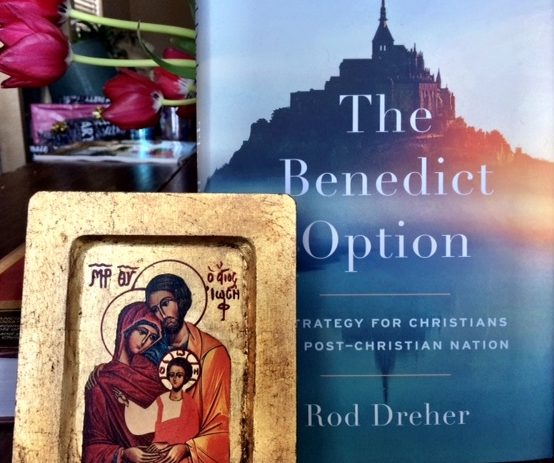
Benedict Option collage

Since I already have some pretty definite opinions about the book, I thought maybe I ought to read it.  My preliminary thoughts about Rod Dreher‘s The Benedict Option is that it offers a good analysis of the present states of both culture and Church, but Dreher’s solution seems more imposed than necessary or biblical. In other words, Dreher seems to have a fascination with the Rule of Benedict, and uses the current social climate as an excuse to encourage others to embrace it.

It’s not that I think there is no benefit from Benedictine practices. On the contrary, I was intrigued a few years ago when reading Dennis Okholm’s Monk Habits for Everyday People with a group of pastors with whom I would meet monthly or so.  What I appreciated from Okholm’s work, and expect to appreciate from Dreher, are the categories of thought the Benedictine’s have developed.  I appreciate many of their disciplines, and I can see that many of their practices could help cultivate a disciplined and rich spiritual vitality.  However, the notion of withdrawal from the world at the root of Benedictine discipline, is not only an impractical option for most people, I am convinced that it violates Jesus’ command to his disciples found in John 20.21:

“Peace be with you. As the Father has sent me, even so I am sending you.”

And it is out of line with God’s expressed instruction to his people who were living in Babylonian exile, as recorded in Jeremiah 29.7:

“But seek the welfare of the city where I have sent you into exile, and pray to the Lord on its behalf, for in its welfare you will find your welfare.”

In other words, despite some – even many – ideas worthy of serious consideration, and that might be appropriate to be adopted with some adjustments, it seems to me that The Benedict Option is not really an option for those who want to be faithful followers of Jesus Christ.  And Dreher himself seems to understand this since, despite the provocative title, he spends much energy explaining that what he is encouraging is the employment of some of Benedict’s principles without necessarily actually withdrawing into monastic communities.

See also:

Race & the Church RVA: Walking the Path of Love

The sixth and final gathering of Race and the Church took place in Richmond, Virginia on Saturday November 19. The first of two sessions that morning featured Dr. George Robertson, Senior Pastor of the historic First Presbyterian Church of August, Georgia, and Moderator for the 44th General Assembly of the Presbyterian Church in America.  Dr. Robertson’s message was Walking the Path of Love.

Buyers Remorse: Election Edition

vote-by-post

I have never been a fan of early voting, especially not in something as significant as a presidential election.  I am of the opinion that there are some things important enough that people ought to order their lives around them in order to participate.

As a Christian, and a pastor, I would consider the Lord’s Day to be the ultimate example of such a thing.  God created the world in a span of six day then, essentially and metaphorically, “rested” the 7th Day.  God then decreed that people – especially those who claim to be devoted to God – should follow the same pattern; that we ought to set one-day-in-seven as a Sabbath, where we rest from our labors, and commit the day to God in a way unique from the others (which also actually belong to God).  The Sabbath is a gift, if we understand it correctly. The 4th Commandment, that requires humanity to observe this day in no way mitigates the gift God has given us in the form of a day of rest. My point in this post is not to make a case for a specific day of Sabbath, nor to consider appropriate vs. inappropriate activities for this day, but only to offer it as an example. A Sabbath day, commanded by God, as a gift of God, is intended to be, and is important enough to be, a day set aside, around which we build our weekly schedules.

While less important cosmically than a Sabbath, in the civil sense Election Day is monumental enough that people ought to set the day aside, and vote on the appointed day, whenever possible. In other words, Election Day is too important to subordinate it to the idol of convenience.

Granted, some exceptions can, and should, be made.  For instance, the case for our daughter who, as a student at a college in another part of the state, would find it quite difficult to appear at our home precinct. She needs some accommodations.  I am not sure that an absentee ballot would not be a sufficient accommodation, but in Virginia an early voting option is offered. And students are not alone in their need for some accommodation.  Some whose business travel requires them to be out of town, others who may be in the midst of various types of long-term infirmities, are examples of those I believe should also be afforded some sort of accommodation.  But the thing is, in Virginia early voting requires a good reason. Simply avoiding lines, or whatever motive for convenience, is not sufficient reason.  But not all states are as much sticklers as Virginia is.  in Tennessee, for example, which I consider to be my adopted home state, early voting is just one option among many, offered for convenience.  As I understand, far more states are akin to Tennessee than to Virginia in this respect.

I appreciate those who are concerned about restriction that make voting prohibitive for some segments of our society. In no way would I want to endorse practices and policies that would suppress legitimate opportunities for any citizen to vote.  But I fear that by making convenience a chief factor in our national elections, we have devalued the importance and downplayed the privilege extended to every citizen of the United States.  I can’t help wondering if this – along with an unappetizing roster of candidates – has not played some part in declines in voter turnout.

Having expressed some of my philosophical aversion to allowing early voting as a common option, I want to turn my attention to the more pragmatic reasons for my oppostion.

About a month ago – 6 weeks before Election Day 2016 – some political analysts expressed their concerns about early voting.  Their concern: simple regret.

“Some people have estimated, and this may be way too large, that one third of the electorate will already have a voted early by November 8 of this year. One-third!”

“And somebody could say, ‘Well I wouldn’t have voted for that person if I would’ve known that that happened 24 hours ago’,”

I am not a fan of October Surprise as a political strategy. It seems to me, if a candidate is worthy of my vote he or she ought to show me why they deserve it; not keep pointing out to me why the other candidate does not deserve it.  Someone else’s disqualifying characteristics do not necessarily qualify me.  But sometimes, like this year, what comes to light in the final days of the election season are not mere sleazy revelations from the opposition camp, but legitimate news of criminal or disqualifying facts from legitimate sources.  And as some political analysts predicted a month ago – weeks before revelation that the FBI was re-opening its investigation of Hillary Clinton – once certain facts come to light, conscientious people are likely to have regret.  But their vote has already been irreversibly cast.

In our present election cycle, it is difficult for me to believe that if the one about whom these potentially criminal revelations have surfaced is elected, that the citizens of the USA will have any reason to believe real justice will ever be carried out.  Whether the possible allegations are legitimately criminal or not, I do not know.  But if a candidate with a reputation for and  history of cover up is elected, unless impeached, can we ever know if justice is done?

If early vote were not such an easy option, those who are already experiencing buyers remorse would not be able to send the nation in such a regrettable direction.

Race & the Church RVA: The Church’s Commission

The third gathering of Race and the Church in Richmond, Virginia took place on Saturday May 14.  Featured speaker Leonce Crump addressed the diverse crowd on the subject of The Church’s Commission.

Leonce Crump’s bio, from the Race and the Church RVA web page:

Originally from Louisiana and raised Catholic, Léonce began following Jesus at age 16. Always an athlete and a talker, Léonce outran his first mall security guard (and pregnant mother) at age 3, and spent most of his grade school years talking with his principals on the subject of public speaking during class. He has been in ordained ministry for 9 years, is a graduate of the University of Oklahoma; and holds Masters degrees in Criminal Justice, with a focus on Case Law, from the University of Tennessee, Missional Leadership from the now defunct Resurgence Theological Training Center, an; is currently finishing his Masters of Divinity at Reformed Theological Seminary.

At Oklahoma he was an All-American wrestler and played a short while on the Sooner football team. He experienced an extended time of rebellion and running from God during college, but after 22 months of living as though he were not a Christian he surrendered to Jesus and ultimately to God’s calling into ministry. After college Léonce competed to make the world team in wrestling, played professional football for the New Orleans Saints and coached collegiate wrestling.

Prior to planting his present church, Léonce had served in 3 churches, starting and leading 3 college and young adult ministries. In 2006 he felt called to plant a church and settled on the under-served area of downtown Atlanta; and in early 2008 he and his wife began the process of planting Renovation Church, in partnership with  Acts 29 and Perimeter Church.

A prodigious reader and engaging speaker, Léonce regularly speaks and preaches across the country at conferences and churches of all denominations. Léonce enjoys boxing and MMA, studying theology, history, leadership, church structure and poetry. He likes Soul music, jazz/standards, and Bossaniva. He also loves to lift, keep up with wrestling, football, and rugby, playing with his kids, hanging with the homeless dudes.

To view the first two gatherings of Race and the Church RVA:

Race & the Church RVA: Why Do We All Look the Same?

The second gathering of Race and the Church in Richmond, Virginia took place on Saturday morning March 12. The theme was: Why Do We All Look the Same? A Cultural & Theological Analysis of Underlying Church Dynamics; featuring speaker Dr. Alexander Jun.

Alexander Jun is a professor at Azusa Pacific University, a TED Talk speaker, and author. He has published extensively on issues of post-secondary access for historically underrepresented students in under-served areas. Jun is also a respected Ruling Elder in the Presbyterian Church in America.

To view the message from the first gathering, with featured speaker Sean Lucas, click: Race and the Church: Telling the Truth.

Race and the Church RVA: Telling the Truth

On Saturday morning January 30, scores of church leaders, along with a smathering of parishioners, gathered in the basement of an old department-store-turned-church in Richmond, Virginia for a discussion on Race and the Church. The invited primary speaker was Dr. Sean Lucas, pastor of historic First Presbyterian Church of Hattiesburg, Mississippi; adjunct professor at Reformed Theological Seminary; and author of the recently released For A Continuing Church.  I considered it a privilege to be among those gathered, though participation was an open invitation.

My primary takeaway from that morning meeting is that much of our current racial rifts, and the prevailing voluntary segregation of Sunday mornings, is due in large part to a history that has barely been openly acknowledged, much less genuinely and transparently repented.  Dr. Lucas provided ample examples, as the video above reveals (and his book expands upon).  And while in many respects progress has been made, and reconciliation is occuring, there is still work to be done for the church in America to truly be one, as Jesus prayed for us to be. (John 17) A large part of what is left to be done is for White Christians – the “White” church – to go back in time, to understand and to own our sins, and our forefathers’ sins, related to racism.

Some may balk. Perhaps understandably.

“How many times must we say we are sorry?”

“I was not even born during the period of the Civil Rights Movement, so how can I be responsible?”

While such rebuttals may be honest and true, they have not proven effective to bridge the reconciliation gap.  The desire and demand of Jesus is not that we merely go through the motions, but that we be “One” just as he is one with the Father, and with the Holy Spirit.   No doubt that in many cases there is forgiveness that has been withheld.  But even where this is the case, there is still a need for those of us who were born into the majority side to repent – to take steps back, to come to understand what was done in the name of the Church bur for the cause of bigotry.  And we do not go alone, but rather we go there with our brothers and sisters of color. We go together that we may walk together, retracing the ways we have failed – failed one another, and failed our God – moving together in repentance and faith.

Take some time to watch the video. If you are in the Richmond area, join us for a future event.

Selling Out the Gospel at the Altar of Politics

Divided Heart (Pink-Green)

I don’t do politics on social media (nor in the pulpit), but I feel an exception is warranted – on social media, anyway. With the exception that I don’t really care that Donald Trump has not previously held public office, nor do I care that neither Ben Carson nor Carly Fiorina have ever held public office, pretty much everything else Peter Wehner writes in his Op Ed for the New York Times, Why I Will Never Vote for Donald Trump, reflects my sentiments. I am disturbed by Trump’s behavior, and even more so by some of his supporters who have compromised core values and beliefs to empower him.

I know. This is politics. And Trump’s supporters have every right to support him, for whatever the reasons.  For a time I was open to the possibility, despite questions about the basis of his present positions.  I accept that people change.  But with no history, or substantive rationale for changes in convictions, I can only wonder how long it will be, or what circumstances might arise, before we see some of these key convictions shift back.

More disturbing to me than Trump are some of his supporters.  Here I do not mean the rank-and-file Trump supporters, who enjoy the bravado, and with whom the simple catch phrase “Make America Great Again” resonates.  I too am entertained, or at least I have been, to a degree. And I appreciate the vision of restoring the greatness of the USA – even if I am a little unclear whether Trump’s definition of what would make America great and my definition are similar; and even if Trump’s specific plans to usher in such restoration seem a little fuzzy to me.  I am disturbed most by those who are endorsing Trump, even when Trump clearly does not represent their core values and beliefs.  In other words, I am most chagrined by Christians – especially those claiming to be Evangelicals – who are compromising their faith to endorse Trump.

Now let me be clear here.  Every citizen of the USA has a right to support whatever candidate they want. I do not believe Christians have a responsibility to restrict their vote to only Christian candidates. Therefore, I support the right of my fellow Christians, even fellow Evangelicals, to support Trump, if they believe he would be the best leader for our country. (Check out Mark Tooley’s thoughtful piece: Trump, Evangelicals & Security.) What I do not accept are Christians – especially Evangelicals – who will rewrite the Faith to justify their support.

The poster boy of my ire is Jerry Falwell, Jr.

In recent months Falwell has made some asinine statements and decisions. Among them was to invite Trump to speak at Liberty University, where Falwell is currently president, on Martin Luther King Day.  Again, I need to be clear. I support Liberty University’s decision to have Trump speak, just as I appreciated them inviting Bernie Sanders to speak. A university is a place of ideas, where a variety of viewpoints should be allowed to be expressed.  So as long as a clear distinction is made between a chapel service (during which any speakers should intelligently and faithfully exalt the One True God) and a convocation (where any variety of ideas could be expressed) I have no problem.  But given Trump’s history, or at least his reputation, of bigoted statements, it seems more wisdom could have been exercised about the date when Trump would be invited to speak.  A day that is designated to highlight efforts to bring about racial reconciliation does not seem the most sensitive or appropriate.  Of course that is just a judgment call. (For anyone interested, my friend Marc Corbett, a Liberty University alumnus, wrote an excellent piece for The Gospel Coalition.  Take a moment to listen to Marc’s lament: Why I Will Protest a School I Love.)

Most disturbing to me is Falwell’s recent total redefinition of Christianity in his justification for inviting Trump to speak on MLK Day, and in his subsequent official endorsement of Trump.  Again, I believe Falwell has the right to support, and even endorse, whoever he wants.  In his formal endorsement Falwell said only that:

“[Trump is] a successful executive and entrepreneur, a wonderful father and a man who I believe can lead our country to greatness again.”

But Falwell’s previous justification and reasoning was this:

“I have seen firsthand that his staff loves him and is loyal to him because of his servant leadership. In my opinion Donald Trump lives a life of loving and helping others as Jesus taught in the great commandment.”

Falwell has since offered an explanation, an Op Ed in the Washington Post.  And I concur with much of his reasoning, even if I would not land on the same candidate. Nevertheless, his reasoning and his freedom – both as an American and as a Christian – to endorse Trump does not negate Falwell’s compromise of the gospel,  and his misuse of the scripture.

Continue reading