Doctrine

Do you want a good overview of the doctrines of the Christian faith? Would you be open to a introductory course, but are afraid people in your church might think lesser of you because of what you don’t know? (Most of them don’t know either, by the way.)  re:Lit publications has developed Doctine by Mark Driscoll & Gerry Breshear to introduce an overview of the themes of the Bible.

On the web site, across the top of the screen are icons that provide a brief synopsis of each doctrine. Additionally at the top right of the synopsis is a link to an audio/video of messages Driscoll delivered at Mars Hill Church that served as a foundation for each chapter.

Crossway Books has an e-book available free online.

  • Click: Doctrine
  • Scroll down to Contents
  • Click the Chapter Ttile

The Deep Church

At the suggestion of a friend, I recently read Jim Belcher’s Deep Church. I was not disappointed. This is thoughtful and thought-provoking book. 

The subtitle really captures the theme of this book: A Third Way. 

With all the discussions about “how” to do church, and the polemic approaches of the Traditionalists and the Emerging/Emergent, some of us find ourselves caught somewhere in the middle.  I see strengths and weakness in both movements. 

Belcher offers understanding of both worlds. With his understanding he offers honest reflections.  Belchers experience and research are helpful for bringing clarity about the issues of the debate and the players doing the debating.  I especially appreciated his dilineation of the “protests” being offered by the Emergning/Emergents against the practices of traditional church:

  1. Captivity to Enlightenment Rationalism
  2. A Narrow View of Salvation
  3. Belief Before Belonging
  4. Uncontextualized Worship
  5. Ineffective Preaching
  6. Weak Ecclesiology
  7. Tribalism

Honestly, I share these collective frustrations – though I cannot endorse the Emergent solutions.

More than just offering perspective, Belcher offers his thought process as he wrestles with the strengths and weaknesses of both the Emerging/Emergent and Traditionalist arguments.  He does not seem to be trying to convince anyone to embrace his positions, only sharing the insights of his personal and spiritual leadership journey.  I found this helpful. It was almost as if I had someone to talk with about these issues as I contemplate my own positions, questions, and inclinations. 

Most important, at no point does Belcher compromise by seeking the “middle way”.  Instead, listening to both sides of the debate, he searches and wrestles with Scripture to find “A Third Way”. 

The Bereans would be proud.

Humble Ambition

Pioneer missionary William Carey is noted for his mantra:

“Expect great things from God, and attempt great things for God.”

These are tremendously inspiring words.  They call us to think about the God in whom we believe, and whom we serve.  Jesus reminded us that “With God nothing is impossible.”  (Luke 1.37)  When Paul thought of our God he wrote: “I can do all things though Christ who gives me strength.”  Philippians 4.13  (I know these verses are often taken out of context, but the point is still valid.)  And having thought of God, Carey’s words encourage us to step out in action.  It is putting feet to our faith.

The question for me is: How does humility fit in here?  When I think of the things I would like to accomplish in my life, I have to ask myself: Is this Holy Ambition or simply Wholly Ambitious?  It is a real dilemma.

I am completely honest when I say that what I want most is for God to be glorified in my life and through my life. But at the same time, I confess, there is a part of me that would enjoy at least some credit, a little bit of the noteriety.  How much of the glory I want varies with each day – and with how honest I am being with myself.  In short, I do desire God’s glory, but my ego is all too alive as well.

How do I resolve this tension? How do I live out William Carey’s mission statement?

Dave Harvey, of Sovereign Grace Ministries, has written a new book, Rescuing Ambition, addressing this very issue.  I have yet to read the book, but I am placing it high on my On Deck list. 

A sneak peak is offered through a series of helpful posts Harvey has written for The Gospel Coalition:

Jesus Freaks

Studying the Church at Smyrna, while working through a series from the 7 Churches in the Book of Revelation, reminded me that persecution of Christians is not just something that took place on the pages of ancient history.  Persecution of Christians is an ever-present tragic reality.  We are told by historians and scholars that more Christians were persecuted for their faith duing the 20th Century than during all history up to that time – COMBINED! 

As startling as that statistic may be, it is important for us to be aware. 

As Christians we are instructed to “bear the burdens” of other believers (Galatians 6.2), and to “rejoice with those who rejoice and mourn with those who mourn”. (Romans 12.15)  We can do none of those things if we are not aware of what others are experiencing. 

We are also strangely strengthened by the examples of those who have endured suffering and persecution for the sake of Jesus.  Their testimonies ought to be an important part of our devotional diet.

There are a number of good resources that will share the stories of those who have endured hardship, indignation, and even martyrdom, for the Cause of Christ.  The classic is Foxe’s Book of Martyrs. Another I recommend is a more contemporary book – one I was at first skeptical about simply because it is written by the members of CCM’s DC Talk.  (I didn’t know anything about them.  I just assumed: “How deep can it be?”  But was I ever wrong…)

Jesus Freaks by DC Talk is a wonderful collection of testimonies of those who have glorified God by faithful endurance throughout the generations.  Each account is brief and profound.  Simply by reading a page or two daily, or periodic intervals, will enrich the reader with chronicles of Chrisitans whose lives have been poured out for God’s Glory.

Impressions of The Shack


Inquiring Minds Want to Know: What do you make of The Shack?

To be quite honest, I do not know what to make of the book, The Shack.  My impression is that the author, William P. Young, made a noble attempt to explain some of the more difficult questions about God, and did so in an engaging narrative.  At the same time, he crossed over some cherished ground in a manner that leaves him open to charges of heresey.

Is Young alone in this?

No. C.S. Lewis, among others, trod this path long before Young. 

So what do I think?

I think I am thankful for keener minds than mine.

In particular, I was intrigued with Tim Keller’s analysis of The Shack. Keller makes it clear that he was not offering a review, only some impressions. Still his comments are worth considering:

At the heart of the book is a noble effort — to help modern people understand why God allows suffering, using a narrative form. The argument Young makes at various parts of the book is this. First, this world’s evil and suffering is the result of our abuse of free will. Second, God has not prevented evil in order to accomplish some glorious, greater good that humans cannot now understand. Third, when we stay bitter at God for a particular tragedy we put ourselves in the seat of the ‘Judge of the world and God’, and we are unqualified for such a job. Fourth, we must get an ‘eternal perspective’ and see all God’s people in joy in his presence forever. (The father in the story is given a vision of his deceased daughter living in the joy of Christ’s presence, and it heals his grief.) This is all rather standard, orthodox, pastoral theology (though it’s a bit too heavy on the ‘free-will defense’).  It is so accessible to readers because of its narrative form. I have heard many reports of semi-believers and non-believers claiming that this book gave them an answer to their biggest objections to faith in God.

However…

Keller’s “However” needs to be considered. To read Keller’s post click: The Shack – Impressions.

A Praying Life

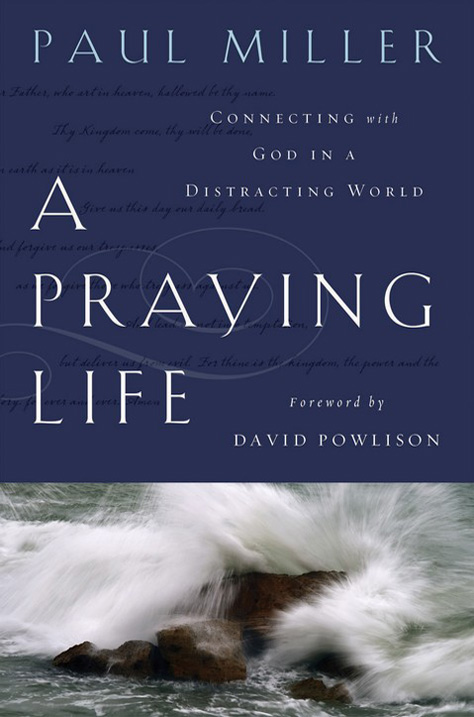
Praying Life“Lord, teach us to pray.”   That’s the request of the disciple of Jesus. (Luke 11.1)  That’s a request that should not be limited to ages past or the pages of the Bible. It is the heart request of any disciple of Jesus. 

My friend, Paul Miller is Jesus’ tool to answer that request in this generation.  In his book, A Praying Life: Connecting With God in a Distracting World, Paul helps people like me, people who sometimes struggle in knowing how or what to pray; people who find their minds wandering often whenever trying to commit longer periods of time to pray; people who sometimes wonder if God get’s tired of these simple, random, and inarticulate petitions.

Paul reminds us what it means to be a child of God, and the implications that has for our prayer life. He helps us see that God will never reject those who come to him with a child-like heart, and therefore will certainly not be disappointed in us if we come to him with child-like characteristics.  Paul “redeems” the mind-wandering, and sets us free to enjoy our Father in prayer.

Check out a sample chapter and a review from NavPress.

3 Short Books I Wish Everyone in My Church Would Read

I read a fair amount.  I have been accused, and probably rightly so, of unrealistically pushing books and other reading materials on people who don’t read quite as much; who don’t have the time to read as much; who don’t get “paid” to read as much (as I, in part, am).  But there are ideas and expressions I have benefited from, that I am not sure I can adequately convey, and I like to share them with others. I like to hear how others are struck by the same insights, when the authors’ words are not colored by my thoughts.

I know that I will never get everyone in my church to read all the things I’d like them to read.  But there are three very short books that I have begun to encourage people to read:


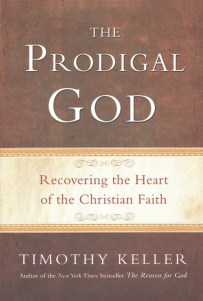
The Prodigal God by Tim Keller

This book is subtitled: “Recovering the Heart of the Christian Faith”.    
Cover Prodigal God

Keller elaborates on the well known story of the Prodigal Son, and offers a not-so-often recognized perspective:  The story is not about a wild son who receives mercy and grace from his benevolent father.  This is a story about two sons. In fact, this is a story about a Father who had two very different sons. It is THE story of God the Father and how people relate to Him in two different ways.

Each son is a reflection of the respective ways people relate to God.   

The younger son is the picture of all who go astray from God and his Law and, having been broken, recognize the emptiness and hopelessness of life apart from the Father.  When awakened to their desperate situation they find a grace and relationship with the Father that is ovewhelming.

The older son is the picture of all who try to relate to God, and please God, by being good; by following all the rules.  This is a picture of religious people, of many Conservative Christians. Yet in their own goodness there is an evident lack of heartfelt fondness for the Father, a lack of joy, obvious to all except for them.

In this book Keller helps us to discern our own tendencies in our relation to God.  Using this story Keller helps us see with keener insight that the ONLY way to have a relationship with God the Father is by recognizing that we are all in need and by being recipients of His compassion, grace, and generosity.  Keller shows us that at the end of the story there is only one son, one type of person, still alienated from the Father. It is not the one who seems to have been the most egregious.  It is the one who seems the most righteous.

Keller has also noted: “Our churches are full of Older Brother types… Is it any wonder, then, that the Younger Brother-types don’t want to come home (come to church)?”

OUCH!! 

The Prodigal God is only 133 pages – and the pages are double-spaced.
 Cover Cross Centered Life

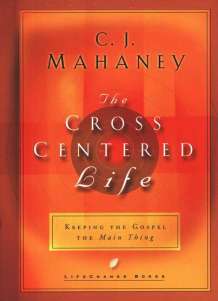
The Cross-Centered Life by C.J. Mahaney

In this 85 page, pocket sized, book Mahaney helps the reader to keep the Gospel at the center of our lives. He helps us to recognize various subtle substitutes that lead us from the Cross, but ultimatley are of little or no help in strengthening the soul. 

Mahaney uses a plethora of annecdotes and illustrations to convey the simple, yet often forgotten and neglected, essential truth: The Gospel is the power to give and to transform life.  Understanding how we can appropriate the present benefits of the Cross is key to vibrant spirituality and joy.


The Dangerous Duty of Delight by John Piper

 I am a long-time fan of Piper’s writing. Nevertheless, I confess, for a long time I refused to read this simple book. I guess I thought this pocket sized 84 page primer of his contemporary classic, Desiring God, was beneath me. After all, I’ve read the BIG book – several times!  But I was wrong.Cover Dangerous Duty
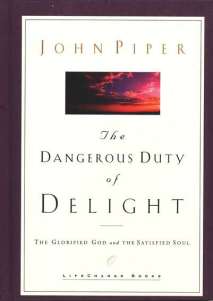
In this little book Piper conveys the essence of the Christian life: To glorify God by enjoying him forever.  It is a great introduction to what Piper calls Christian Hedonism. 

Christian Hedonism may sound like an oxymoron, and even inappropriate, to those who do not undertand what is behind Piper’s message.  But I am convinced that what he espouses is thoroughly Biblical.  It is the recognition that we are created to have a relationship with God; that we are commanded to take delight in God (i.e. Psalm 37.4); and that we are all prone to sell out the ultimate joy we can have in life, in God, for the cheap thrills and pleasures we find elsewhere. 

While I still hope everyone will read Desiring God, this little book, Dangerous Duty, serves as a great introduction that will both lay a groundwork of understanding and whet the appetite for the whole feast found in Desiring God.

You can check out a sample of Dangerous Duty or the entirety of Desiring God online. Just click the highlighted titles.
Pastor Dad: E-book by Mark Driscoll

Pastor Dad

Father’s Day has passed, but I just read a resource I thought I’d pass along to Dads and aspiring dads-to-be.  It is another e-book by Mark Driscoll of Resurgence and Mars Hill Church, this one titled Pastor Dad: Scriptural Insights on Fatherhood

The premise behind this free 48 page book is:

Every dad is a pastor. The important thing is that he is caring for his flock well.

Typical of Driscoll, this book combines sound Biblical insights with some of Driscoll’s brash, over-the-top, in-your-face applications.  So it is not a book for the overly sensitive or the timid.  But, while after a quick read I can say I don’t agree with all his positions, Driscoll’s thoughts are Biblial, practical, and worth considering for those who appreciate, or are at least willing to engage, his style.

Rapture Ready

OUCH!  Yesterday I started reading Daniel Radosh’s Rapture Ready!: Adventures In The Parallel Universe Of Christian Pop-Culture.  It is an outsiders observations of the Christian subculture.  And the author really nails his intended target.

Back in my younger, athletic playing, days from time rapture-readyto time I would take a hit right on a muscle that would somehow simultaneously make me wince and chuckle.  The chuckling wasn’t because I was necessarily tough, it was just the nature of the hit.  I knew some bruising and stiffness was sure to develop in the days that followed.  But it didn’t hurt quite enough to cause actual pain.  So my response would be a dull chuckle with just a hint of an ouch.   

That’s how I have felt when reading this book.  I have had to both chuckle and wince at the same time.  Radosh, a self professed Jewish Liberal, is funny and not unkind. He simply points out the absurdity of some of the things he has encountered and observed.  Unless you take yourself way to seriously you’ll laugh too.  But he also points out some things that should leave a mark on any Christian who reads this book.

A few things have already come to mind as I peruse these pages:

1) Many Christians will go to great lengths to be a “witness” for Christ without actually developing relationships with people.  The ineffectiveness of such evangelism is understandable.  Sadly such gimmicks have become acceptable substitutes for evanglism.

2) Many Christians seem to have given very little thought to what it means to be “worldly”.  It is not the tackiness of the products that makes them worldly, but the values and thought-process that leads to the production of this…, uh, stuff, that reflects worldliness. 

3) We need a serious reappraisal of our priorities. Christian kitsch is a $7-billion per year industry.  What impact could be made toward the alleviation of poverty, illiteracy, AIDS and other health issues, if we invested that money directly?  How long would it take to plant churches among the reamaining UnReached People Groups and translate the scriptures into the languages of those Peoples at a rate of $7-billion per year?  And that’s how much cash we would free up just by passing up on stuff that no one needs, and few could possibly really want.

Diamond in the Rough

The NFL Draft commences in a little more than an hour from the time I write this post.  Not surprising, the pre-draft headlines are focused on Matt Stafford, out of the University of Georgia, and Marc Sanchez, out of Southern Cal, two high profile quarterbacks.  But the real story of this draft, no matter where he ends up, is Ole Miss Offensive Lineman Michael Oher.

The video above gives an overview.  The best video I’ve seen, giving much more of the whole story, was on ESPN earlier this afternoon, which you can watch by clicking: Adopted Family Helps Oher

Oher grew up on the streets of Memphis. His mother was a crack addict. His father had been murdered.  Oher was homeless and left fending for himself by age 6.  He didn’t know his correct birthday or his own real name.  Because of his size and athleticism someone sent him to Briarcrest Christian School to see if he might help out the athletic program.  Briarcrest officials recognized that Oher was completely unprepared for the academic rigors of the school, but also knew that he had no place to turn. So they allowed him in school, on academic probation and inelligible for any athletic competition until he was caught up in school. 

As amazing as that part of the story is, there is more.  While enrolled at Briarcrest Oher was still largely on his own. That is until one cold Thanksgiving night, a school classmate driving with her family spotted Michael on the street wearing shorts and a thin T-shirt.  The Tuohy family turned their car around picked Oher up and took him to their home.  Over time the Tuohy family bought Michael clothes and food, and allowed him to stay with them – until they finally adopted him into their family. Loved for the first time in his life Oher progressed in the classroom and on the football field. He enrolled at Ole Miss and became an All American. Today he will become a first round draft choice – and a millionaire.  But I suspect Michael Oher will be the one man drafted who understands that love far outvalues cash.

The story has already been made a book, The Blind Side, which has been on the New York Times Bestseller list.  It has been featured on NPR’s All Things Considered. And a motion picture is in the works.  But it is the story that may not be told that also fascinates me. It is the story of those whose faith was expressed through tangible love. It is the story of the Tuohy family and the folks at Briarcrest Christian School.the-blind-side

Think about it. The Tuohy’s were a well-to-do Memphis family.  They had children, including an attractive teenage daughter, who I’m sure they were concerned to protect.  And here is this big, huge, black guy, from the streets, that they invited into their home.  I know race should not matter, but it is Memphis. But even apart from race, this is a huge, undisciplined, teenager off the streets.  Most people would have just kept driving. Some kind folks may have bought food and clothes. Others may have gone so far as to make sure he found a home.  But risk the unknown, and with children in the home? I imagine few would have done that.  But the Tuohy’s did. They were compelled by love. And their love transformed a life.

I also have to commend the headmaster at Briarcrest.  Not many administrators would have done the same thing. Some may have admitted Oher because of his athletic prowess. But how many would admit him simply to help him?  Briarcrest had no reasonable reason to expect that Oher would ever succeed in the classroom. When he got to the school he carried a 0.4 gpa.  But these people cared. They lived out their faith, and helped this helpless young giant, even when they had little hope to benefit from it. They reflect what Christian Education ought to be about.

This story makes you feel-good, no matter how it is told. But I stand in awe as I see the Apostle Paul’s words come to life on ESPN:  “The only thing that matters is faith expressing itself through love.” (Galatians 5.6)

Worldliness in Prespective

worldliness1

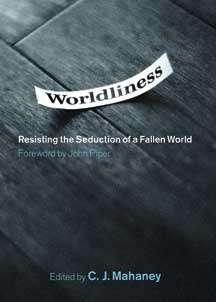
I recently finished reading the short book Worldliness, edited by C.J. Mahaney.  Each chapter is written by different men from the Sovereign Grace family.  I found it very insightful and practical. 

I appreciate that the writers did not merely resort to the worn out separatist “Us vs. The World” rhetoric.  Instead they wrestled intelligently, theologically, and bibilcally about the pertinent questions: What does worldliness actually mean?  What actual problems does worldliness pose?  Only once those questions are amply answered do the writers delve into practical applications in the various spheres of our culture.

I had given some thought to blogging about the book.  Already in previous posts I have elaborated on some of the insights I have gained.  But then on Crossway.blog I have found that Jonathan Leeman of 9 Marks has shared some highlights from each chapter.  Leeman has done such a good job that it made my intentions unnecessary.  I will still likely interact and expound upon some other insights in future posts, but for a good introduction to and overview of the book I encourage you to check out what Leeman has written.  Click: Worldliness

But don’t neglect the book. It is short, but beneficial. I’ve added it to my ‘must read’ list.

When Sinners Say “I Do”

after-the-wedding

Had I had my way today my wife and I would be celebrating the 20th anniversary of the date of our engagement.  My thought then was simple and – in my opinion – romantic:  If I proposed on a date that I could easily remember, then we would be more likley to celebrate it in the future.

But, I didn’t have my way.  Carolyn knew that I had purchased her ring and that the jeweler had finished sizing it to fit her finger.  She was impatient.  And for some reason she didn’t seem to share my sentiment that April 1 could be redeemed to be a romantic day for a proposal… So she got her ring a few days earlier – on some long-forgotten date at the end of March.

Since that time I have wised up. No, I still think that April 1 would have been a fine day for the proposal. I have wised up about how much work marriage is.  I know the benefits of working on marriage far exceed the efforts. But through 20 years of marriage (come August) and the scores of pre-marital and marital counseling sessions I’ve conducted as a pastor I have seen conclusively that there is no substitute for working at a good marriage. 

The primary reason work is necessary is our sin.  Sin messes up everything. Sin distorts our perspective. Sin prompts us to self-centeredness & selfishness.  Sin rises up in pride & self-righteousness. And sin makes us unwilling to forgive.  Any of these traits put a damper on a relationship. When any of these come coupled, or more, it does damage to a relationship that takes a lot of work to restore. 

Most counseling seems to focus on pointing out these pitfalls and/or developing the skills to cope and overcome them. These are valuable. But they don’t get to the root of the problem.  If we are going to work wisely and effectively in our marriages, we need to apply the Gospel, which includes addressing our condition of sin and how in each of our lives our sin expresses itself.  Sucgh awareness is able to get to the heart of the matter, and gives much more potency to relational skills.i-do4

For that reason I have been pleased and challenged by a book by Dave Harvey titled: When Sinners Say “I Do”.  

In an excerpt that introduces the book Harvey writes:

Marriage is a union of two people who arrive at the altar toting some surprisingly large luggage.  Often it gets opened right there on the honeymoon, sometimes it waits for the week after.  But the suitcases are always there, sometimes tripping their owners, sometimes popping open unexpectedly and disgorging forgotten contents.  The Bible calls it sin and understanding its influence can make all the difference for a man and woman who are building a life together.   

This is not a discouragng book.  It’s just real. And Harvey wonderfully allows the truth of the Gospel to shine in practical and penetrating ways.

I like the way Paul Tripp describes it in the Foreword of the book:

This book grasps the core drama of every married couple. This drama is no respecter of race, ethnic origin, location, or period of history. It is the one thing that explains the doom and hope of every human relationship…

Working through this book has led me to remember: I am my biggest marital problem.  And whether you are the husband or the wife; whether you have been married 20+ years or if you are still in the stages of preparing for your wedding; that truth is still the same. It is the same for all of us. 

But by wrestling with this problem, and applying the Word of God to those common issues that can plague any marriage, Harvey helps us understand:

When the sin we bring to marriage becomes real to us, then the gospel becomes vital and marriage becomes sweet.

Or simply:

When sin becomes bitter, marriage becomes sweet… 

Grace of Repentance


Today is Ash Wednesday. That does not mean much to many in my theological circles.  But for many other Christians it is a day that launches the Season leading to Easter – the Season of Lent.  This day is designated Ash Wednesday because of an ancient practice of marking believers with ashes as a symbol of repentance. 

Hopefully it is more than symblolic, but is also a reminder that, as Martin Luther said, “When Christ said ‘Repent’ he called for the entire lives of Believers to be lived out in repentance.” 

Repentance is a lost art.  Repentance is also a neglected practice.  I suspect that many assume repentance is someting to be avoided; that repentance is what we must do if we have sinned; but if we can avoid sin we have no need of repentance. 

Seems logical. Except it mischaracterizes the nature of sin.  Sin is not what we do, sin is the condition we have, whether we are aware of it or not.  I find helpful the old saying: “We are not sinners because we sin. We sin because we are sinners.”  Thus, as Luther suggested, the necessity of life lived out in repentance. 

Perhaps a better way of putting it might be that our lives should include repentance.  I say that because repentance never stands alone. Repentance should always accompany Faith; and Faith should always accompany Repentance.  They are two sides of the same coin of Gospel Christianity.

I like the way the old Puritan Thomas Watson says it:

“Faith and Repentance are the two wings by which we fly toward heaven.” 

I love the imagery. It shows us that our salvation involves not only our conversions (which, by the way, requires both Faith & Repentance), but is a sanctifying journey which requires us to grow in our awarenss of both our ungodliness and the greatness of the Gospel.  To have one wing longer than the other; or worse, to have only one wing, would be disastrous.  Try it for yourself.  Try flying one of those balsa wood planes, with one wing longer than the other and see how it flies.  But this is life without both Faith & Repentance.

Three books I have found helpful in shaping my understanding and appreciation of the need of ongoing repentance:

Repentance & 21st Century Man by C. John Miller

The Doctrine of Repentance by Thomas Watson

Repentance: The First Word of the Gospel by Richard Owen Roberts

Making These Mountains Come Alive

boone_captured1

If asked to list my favorite contemporary authors, Cameron Judd would no doubt rank high.  Judd most notably made a name for himself in Westerns, a genre I am not particularly interested in. But he also has delved deeply into Historical Fiction, which from the time I read my first Michener novel has been a literary style that captures my inaginiation.

My appreciation for Judd is reinforced as I finish up the last pages of his work on Daniel Boone just this afternoon.

Judd has written extensively about the history of Tennessee, his home state, with two trilogies, and a few independent biographies of the pioneers.  

To date I have read:

Tennessee Frontier Trilogy:

     The Overmoutain Men  (1757-1777)

     The Border Men  (1778-1783)

     The Canebrake Men (1785-1800)

Mountain War Trilogy:

   Shadow Warriors  (1860-1863)

   Phantom Legion  (1863)

   Season of Reckoning  (1864-1866)

Biographies:

   Boone

   Crockett of Tennessee

I first read the two trilogies several years ago.  But when we returned to East Tennessee I took them off the shelves to re-read.  The Historical Markers now almost seem to have life as I occasionally explore the region on days off. 

I think the next Judd work I’ll tackle is his historical work, Bridge Burners.

Sharing the Father’s Welcome

Tim Keller’s new book, The Prodigal God: Recovering the Heart of the Christian Faith, will be released in a few weeks, on October 31. In the book Keller presents a powerful expression of the gospel, rooted in the parable of the Prodigal Son.  Having heard Keller teach from this parable, I am looking forward to the written form.

But Keller’s insights were not developed in a vacuum.  They were cultivated by careful and thoughtful study and prayer. They were built upon a foundation of those who had walked before him, like Edwards and Chalmers. And they were influenced by the wisdom of those who invested in him. Among them, Dr. Ed Clowney, former president of Westminster Seminary, whom Keller credits in the Introduction of this upcoming book as having provided the inspiration: 

Many excellent studies have been written on this Biblical text over the last several years, but the foundation for my understanding of it was a sermon I heard preached over thirty years ago by Dr. Edmund P. Clowney. Listening to that sermon changed the way I understood Christianity. I almost felt I had discovered the secret heart of Christianity.  (Click: article.)

Crossway Books has made available Clowney’s sermon, Sharing the Father’s Welcome.  I hope it not only whets you appetite for Keller’s upcoming book, but that it opens your eyes to see how high and wide and long and deep is the love of God for we, his children.

(NOTE: My thanks to Justin Taylor of Between Two Worlds for tipping me off about this.)