While reading through The Art of Pastoring: Ministry Without All the Answers, by David Hansen, (a book recently recommended to me that I find myself wishing I had read years ago,) I came across this convicting assessment of American culture – an indictment that sadly is also widely applicable to a wide swath of American Evangelicalism:
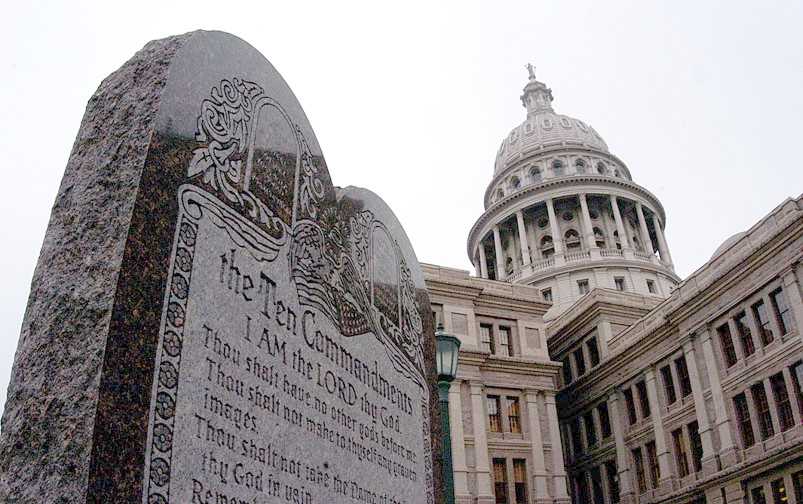
“The majority of Americans will tell any pollster that they believe in the Ten Commandments. But only a small percentage of those people could even recite the Ten Commandment; and even a smaller percentage have any genuine interest in following them.”
Jerry Bridges, in his contemporary classic book, The Pursuit of Holiness, writes about a time when a friend shared some words of wisdom, a “formula” that helps discern right from wrong:
“Years ago a friend gave me what he called his ‘Formula: How to Know Right from Wrong.’ The formula asks four questions based on three verses in 1 Corinthians.”
1. “Everything is permissible for me- but not everything is beneficial.” (1 Corinthians 6.12).
Question 1: Is it helpful – physically, spiritually, and mentally?
2. “Everything is permissible for me – but I will not be mastered by anything” (1 Corinthians 6.12).
Question 2: Does it bring me under its power?
3. “Therefore, if what I eat causes my brother to fall into sin, I will never eat meat again, so that I will not cause him to fall.” (1 Corinthians 8.13)
Question 3: Does it hurt others?
4. “So whether you eat or drink or whatever you do, do it all for the glory of God.” (1 Corinthians 10.31)
Do not move the ancient landmark that your fathers have set.
The thinking behind this applies not only to property boundaries, but also to principles and and doctrines of Faith. We forfeit a wealth of wisdom if we ignore the insights of those who have gone before us.
Thus is the value of Creeds and Confessions of the Christian Faith.
Creeds help Christians make sense of the Bible by highlighting what is important and summarizing its essential message. In an age of individualism and skeletal creeds, or bare-bone statements of belief, the rich tradition of corporate confessions of faith also provide a vital link to the church of ages past and the saints of all ages.
A Confession is a formal statement of doctrinal belief ordinarily intended for public avowal by individuals, groups, denominations, and congregations,; confessions are similar to creeds, although usually more extensive. They are especially associated with the churches of the Protestant Reformation.
Perhaps the most common objection to Creeds and Confessions is that they may become rival to the Scriptures. But the reality is that Creeds and Confessions are simply useful tools for summarizing and systematically teaching what the Scriptures say. Creeds and Confessions are always subordinate to the Bible; and they are only useful when they accurately reflect what the Bible says. As 19th Century Scottish minister William M. Heatherington notes:
“A confession of faith is not the very voice of Divine Truth, but the echo of that Truth from souls that have heard its utterance, felt its power, and are answering to its call.”
For this reason i am thankful to be part of what is called a “Confessional” tradition. I am the beneficiary of many who have come before me. It is also the reason I found the chart above to be helpful. the chart lists the various Confessions, from multiple traditions, which can be mined for their golden nuggets of wisdom.
For more reading on the subject of Creeds and Confessions, check out:


 GRACE & PEACE